
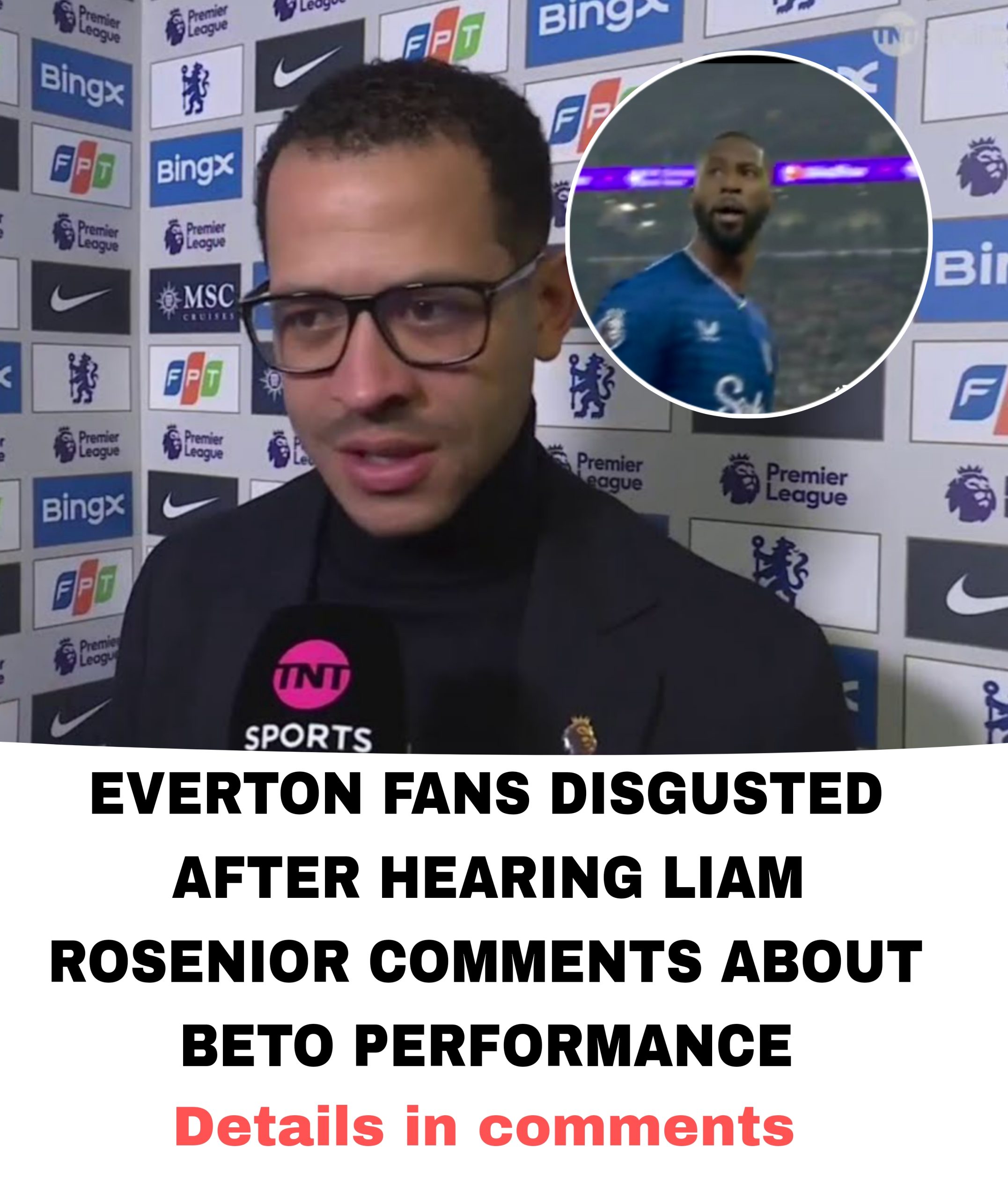
Liam Rosenior’s blunt criticism of Beto sparks backlash despite Everton’s 3–0 win over Chelsea
Everton’s emphatic 3–0 victory over Chelsea FC should have been a night of celebration at Goodison Park. Instead, the post-match narrative has been dominated by surprising and frustrated comments from Chelsea manager Liam Rosenior, who openly criticised Everton striker Beto — despite his team being comfortably beaten.
In a press conference that quickly went viral, Rosenior’s unusually negative assessment of an opposition player left fans stunned and sparked widespread backlash.
—
The comments: Frustration spills over after defeat
After watching his side fall to a heavy loss against Everton FC, Rosenior appeared visibly frustrated — and his focus turned unexpectedly toward Beto.
> “I’m going to be honest — I don’t think he was good. Not at this level.”
He went further:
> “His movement wasn’t sharp, his decisions were poor, and if I’m being frank, we should have dealt with him much more easily.”
The remarks raised eyebrows immediately. Criticising an opposition striker after losing 3–0 — especially when that striker was part of a winning side — struck many as both unusual and unnecessary.
—
Match context: Everton dominant despite Beto’s mixed display
Everton were in control throughout the match:
3–0 victory with goals coming from multiple attacking sources
Strong midfield dominance and defensive organisation
Clinical finishing in key moments
Beto’s individual performance, however, was more understated:
Contributed with pressing and physical presence
Helped stretch Chelsea’s defence
Limited direct goal involvement
While he may not have been the standout performer, his role in Everton’s attacking structure was still important in creating space and disrupting Chelsea’s backline.
—
Fan reaction: “No way… what is he saying?”
Rosenior’s comments triggered immediate backlash, particularly from Everton supporters.
Social media was filled with disbelief:
“No way — you lose 3–0 and start criticising their striker?”
“Can’t believe he said this… focus on your own team”
“Game has well and truly gone if managers talk like this after getting beaten”
For many fans, the issue wasn’t just the criticism — it was the context:
Chelsea had just lost convincingly
Everton outperformed them across the pitch
Targeting an opposition player felt misplaced
—
Nigerian fan perspective: Respect matters
Among Nigerian football fans, the reaction was even sharper.
Football culture in Nigeria strongly values:
Respect between professionals
Giving credit to the winning team
Avoiding unnecessary public criticism
Many fans felt Rosenior’s comments crossed a line:
Seen as “sour grapes” after defeat
Viewed as disrespectful to Everton’s overall performance
Criticised for ignoring the bigger picture of the game
At the same time, some acknowledged that:
Managers speak emotionally after heavy losses
Frustration can lead to blunt honesty
Still, the dominant view was clear: the focus should have been on Chelsea’s shortcomings, not Beto.
—
Tactical reality: Chelsea’s real problems elsewhere
While Rosenior singled out Beto, the match itself told a different story.
Chelsea’s issues were structural:
Midfield gaps allowed Everton to control tempo
Defensive disorganisation led to clear chances
Lack of pressing cohesion made it easy for Everton to build attacks
In truth, Beto was not the defining factor in the game — Everton’s collective performance was.
—
A misdirected narrative?
Rosenior’s comments raise an important question:
Was this honest analysis — or misplaced frustration?
Criticising an opposition player after defeat can:
Deflect attention from internal issues
Create unnecessary controversy
Undermine the credibility of post-match analysis
For many observers, this felt like a moment where emotion overtook clarity.
—
What happens next?
The fallout from these comments could linger:
For Rosenior:
Increased scrutiny in future press conferences
Pressure to address Chelsea’s actual performance issues
Need to rebuild focus within the squad
For Beto:
Extra motivation moving forward
Opportunity to respond with performances
Growing attention from fans and media
—
Conclusion
Everton’s 3–0 win over Chelsea should have been the headline — a dominant performance built on organisation, energy, and clinical finishing. Instead, Liam Rosenior’s post-match comments have shifted attention away from the pitch.
By criticising Beto so openly after defeat, the Chelsea manager has sparked debate about professionalism, respect, and the role of honesty in football.
For fans in the UK and Nigeria alike, the reaction has been clear: lose the game, analyse your team — not the opponent’s striker.
And in this case, Rosenior’s words may have said more about Chelsea’s frustration than Beto’s performance.