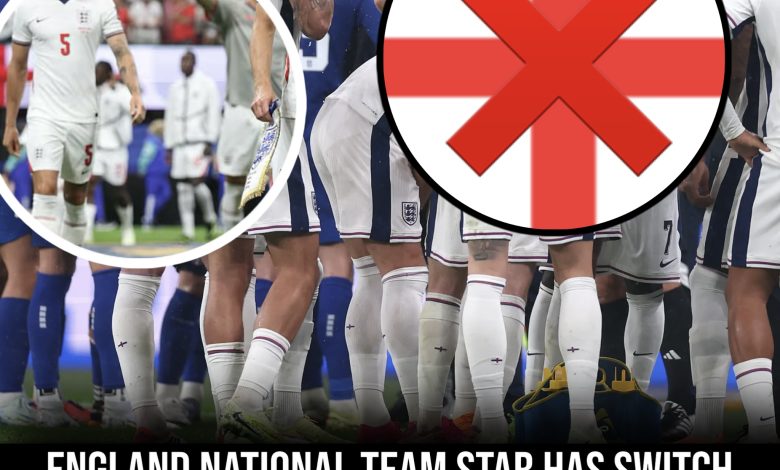
In the most explosive transfer of national allegiance English football has seen in a generation, one of the Three Lions’ brightest talents has ripped up his England future and pledged himself to his mother’s homeland.
The decision is official. The paperwork is signed. FIFA has approved it. And the player who once dreamed of lifting trophies in an England shirt has now made it crystal clear: he will never represent the country of his birth again.
What was once whispered in dressing rooms and agent offices has now exploded into public view. An England international with senior caps, major-tournament experience, and a growing reputation as one of the Premier League’s most dynamic talents has completed a full nationality switch. He is gone. And English football is still trying to process the scale of the betrayal.
The Shock That Hit Overnight
Insiders confirm the final documents were lodged quietly last week. By the time the news broke, it was already irreversible. The player, who has featured for England from youth level all the way to the senior squad, informed the Football Association of his intention only after the process was already advanced. There was no long negotiation. No last-minute attempt to keep him. Just a cold, clinical decision that has left the national team setup stunned.
Those close to the situation say the star had been wrestling with the choice for months. Family conversations intensified. Visits to his mother’s country became more frequent. What began as emotional pull turned into a firm conviction: this was where he belonged.
In a private message circulated among a tight circle of friends and relatives, the player wrote:
“England will always be part of my story. I am grateful for every opportunity. But my mother’s blood runs deeper than any shirt. I have to honour that. This is home now.”
The words have already been screenshotted, shared, and dissected across social media. Supporters who once cheered his every touch for the Three Lions are calling it a gut punch. Rival fans are openly celebrating.
A Career Built in England, A Heart Pulled Elsewhere
The player in question rose through the English system. Academy product. Standout performances in the Championship. Big-money move to a Premier League club. Regular international call-ups. He was widely tipped to be a key figure in the next major tournament cycle. Coaches spoke of his energy, his technical quality, and his ability to influence big games.
Yet behind the scenes, the dual heritage had always been there. His mother, born and raised in West Africa, instilled a strong cultural identity from a young age. Family gatherings were filled with stories of the homeland. The player himself has spoken in past interviews about feeling “two things at once” — English by birth and upbringing, but emotionally tied to his mother’s roots.
Those dual feelings finally tipped. Sources say the decision crystallised after a recent trip to the country of his mother’s birth, where he was mobbed by local fans and treated like a returning son. The reception, the atmosphere, the sense of belonging — it all landed harder than expected. Within weeks of returning to England, the process to switch associations was underway.
FIFA regulations allow such changes under specific conditions, particularly when a player has limited senior appearances or meets certain residency and heritage criteria. In this case, the governing body gave the green light. The door back to England is now permanently locked.
Anger, Disbelief, and Celebration
The reaction has been seismic.
England fans have flooded social media with accusations of disloyalty. Hashtags calling the move a “betrayal” and “disgrace” trended within hours. Some supporters have gone further, questioning the player’s commitment during his time in the white shirt and suggesting he was never fully invested.
On the other side, fans of his new national team have erupted in pure joy. Welcome messages, edited images of the player in the new colours, and bold predictions about what he will bring to the side have poured in. One prominent fan account in the new country posted: “He chose us. He chose his blood. History is being written.”
Pundits have been split. Some argue that dual-nationality players should be free to follow their hearts. Others insist that once you pull on the England shirt at senior level, a certain loyalty is expected. One former international described the decision as “painful but understandable.” Another called it “a massive blow that will be felt for years.”
Inside the England camp, the mood is said to be sombre. Senior figures are disappointed. Younger players who looked up to the star are processing the news. The manager has so far remained silent beyond a brief club-style statement confirming the change of association has been noted.
What This Means Going Forward
The practical impact is immediate. England lose a versatile, high-ceiling talent at a time when squad depth in key areas is already under scrutiny. The player’s club form will now be watched through a different lens — every strong performance will be framed as a reminder of what the national team no longer has.
For his new country, the arrival is a major coup. A Premier League regular with proven quality at international level is a significant upgrade. Expect a swift call-up. Expect a debut that will be broadcast and dissected across two continents. And expect the inevitable first meeting against England — a fixture that will now carry extra venom and narrative weight.
This is not the first time a player has switched allegiance, but the profile of this particular case makes it land harder. England have invested years in his development. The FA, the coaches, the teammates — all of it now sits in the past. The future belongs elsewhere.
The Finality of the Choice
There is no coming back from this. Once the association is changed and the player is capped by the new nation, the England chapter is closed forever. No future manager can call him. No injury crisis can reopen the door. The white shirt has been hung up for good.
Those who know the player best insist this was not a decision taken lightly. There were tears. There were difficult conversations with people who had supported him since he was a boy. There was genuine gratitude mixed with a stronger pull toward identity and belonging.
But the outcome is the same.
An England international has walked away.
He has chosen his mother’s country.
And the Three Lions will never see him in their colours again.
Football moves on. Squads evolve. New names emerge. Yet some departures leave a deeper mark than others. This is one of them. The full consequences — sporting, emotional, and cultural — are only just beginning to unfold.