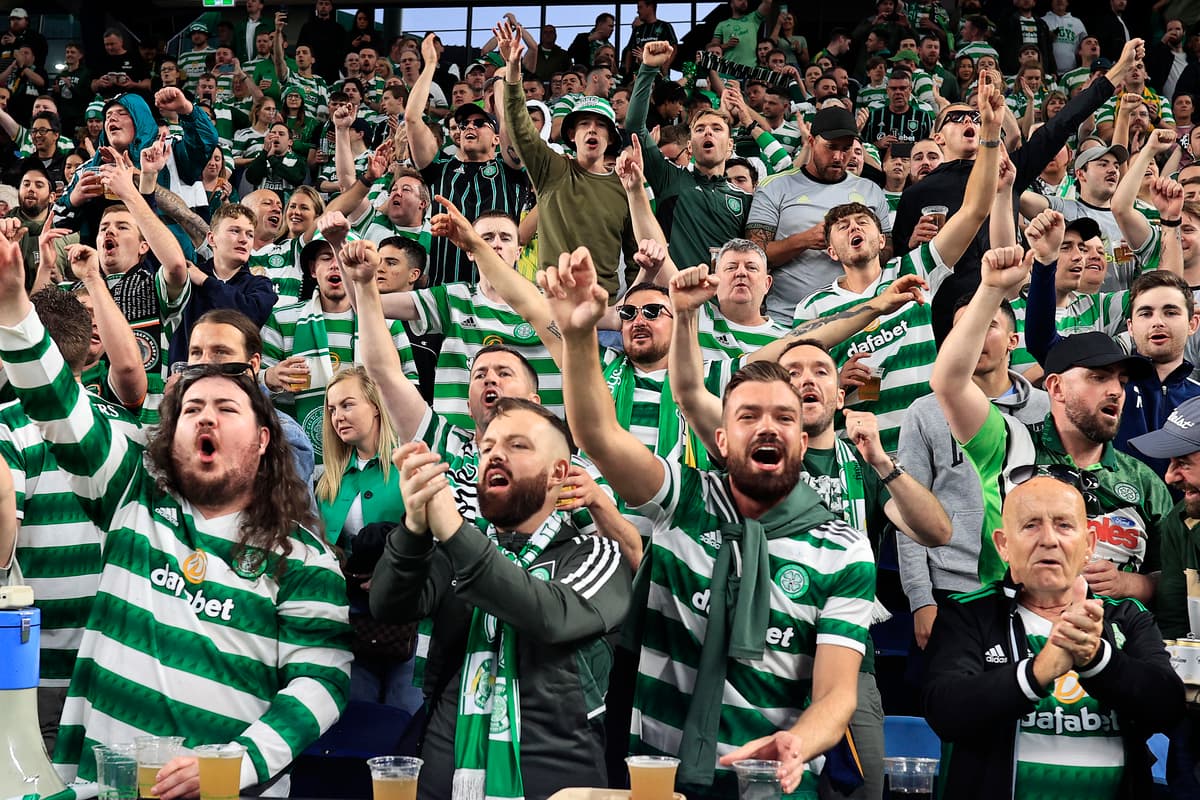

Tensions boiled over in Scottish football this weekend after a fiery post-match outburst from ,Tony Docherty, who did not hold back in his criticism of Celtic FC supporters following his side’s dramatic 2-1 defeat.
The match, held at Dens park saw Dundee fc push the reigning champions to the limit in a fiercely contested encounter. Despite taking an early lead and putting in what many described as a spirited performance, Dundee ultimately fell short after a late comeback from Celtic stunned the home crowd.
However, it was not just the result that dominated headlines. Speaking after the match, Docherty expressed outrage at what he described as “disrespectful and unacceptable” behavior from sections of the traveling Celtic support.
“I don’t believe Celtic fans are this pathetic,” he said bluntly during the post-match press conference. “You come here to support your team, not to create an atmosphere that crosses the line. There were moments today that went beyond football, and it’s disappointing to see.”
Though the Dundee boss stopped short of detailing every incident, reports from inside the stadium suggest there were heated exchanges between fans and players, as well as chants that allegedly provoked a strong reaction from the home bench. Docherty’s comments have since sparked widespread debate across Scottish football, with many questioning whether his remarks were justified or an emotional reaction to a painful defeat.
Celtic, managed by Brendan Rodger’s,mounted a second-half comeback that demonstrated their resilience and title credentials. After falling behind in the first half, the visitors gradually took control of possession and began to assert their dominance. Two late goals turned the game on its head, leaving Dundee players visibly frustrated at the final whistle.
Rodgers, when asked about the controversy, attempted to defuse the situation. “Football is an emotional game,” he said. “Supporters are passionate, and sometimes things can get heated. But we always encourage respect—on and off the pitch.”
Despite Rodgers’ diplomatic stance, the fallout continues to grow. Pundits, including former Celtic striker Chris Sutton, have weighed in on the situation, with opinions divided. Some have criticized Docherty for his choice of words, arguing that labeling an entire fanbase was excessive and could inflame tensions further. Others, however, have defended his right to call out behavior they believe has no place in football.
Fans on social media have also been quick to react. While many Celtic supporters rejected the manager’s claims and defended their conduct, others acknowledged that a minority may have gone too far. Meanwhile, Dundee fans have largely backed their manager, praising him for speaking out and standing up for the club.
The Scottish football authorities are now reportedly reviewing the incident, although it remains unclear whether any formal action will be taken. Matches between Dundee and Celtic have often been competitive, but this latest chapter adds an extra layer of intensity to the fixture.
As both teams move forward, attention will inevitably return to matters on the pitch. Yet, this controversy serves as a reminder of how quickly football narratives can shift—from dramatic comebacks to heated disputes in the stands.
For Docherty and Dundee, the challenge will be to channel their frustration into future performances. For Celtic, the victory keeps their momentum alive, but the spotlight now extends beyond their football.
One thing is certain: the debate sparked by this incident is far from over, and the next meeting between these two sides will be watched more closely than ever.