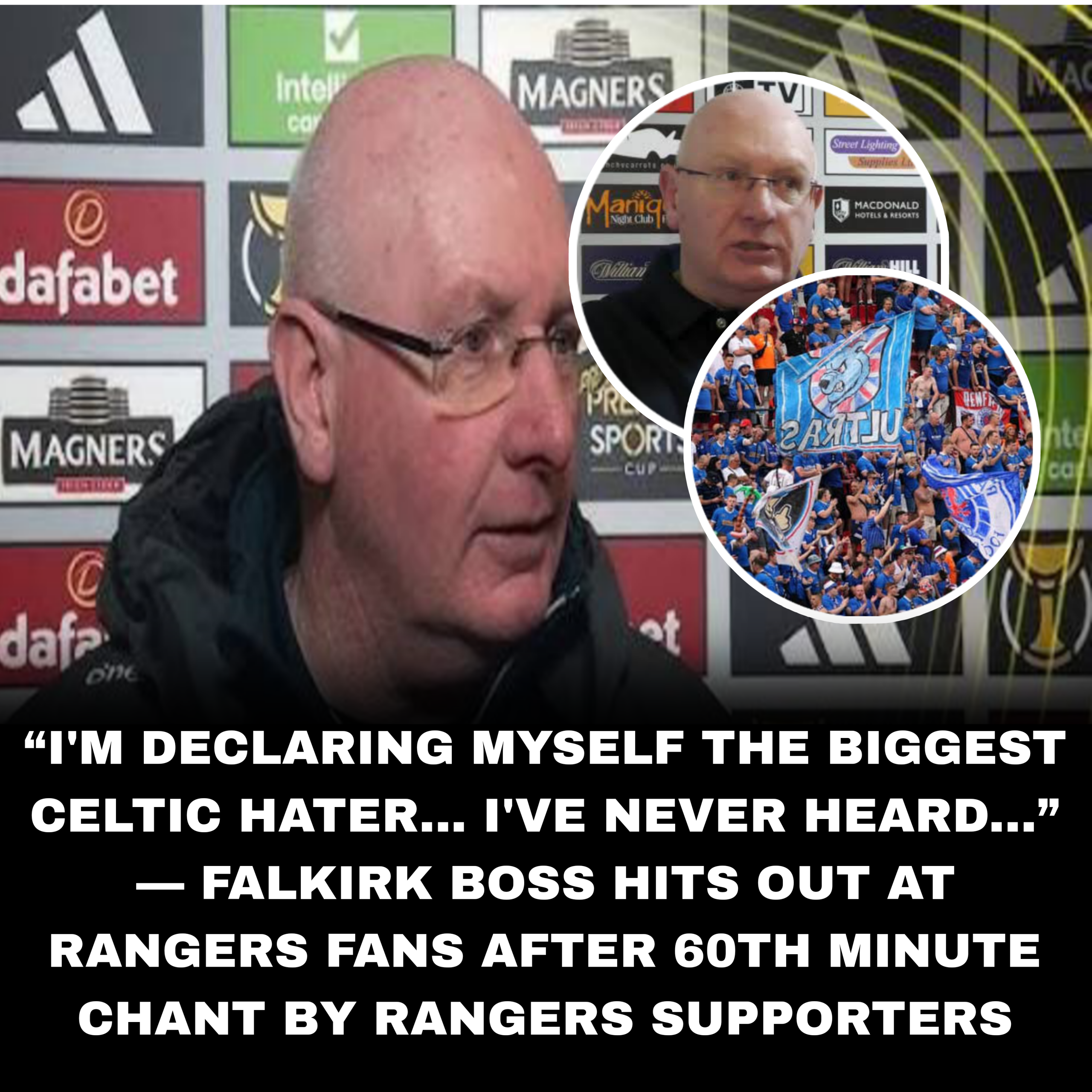

Fury, controversy, and a storm that is rapidly engulfing Scottish football.
John McGlynn has launched an explosive attack following a heated clash involving Falkirk and Rangers, accusing sections of the Rangers support of crossing the line with chants that he believes had a direct impact on the game itself.
Speaking after the match, a visibly furious McGlynn did not hold back.
“What was that chant? Seriously—what was that?” he snapped. “You want to talk about respect in football? After that, no club will ever respect Rangers again if something isn’t done.”
The comments come after claims from the Falkirk camp that persistent chanting from Rangers supporters disrupted the flow of the match, unsettled players, and created what they described as an “unnatural atmosphere” that went beyond typical fan support.
While football is no stranger to passionate crowds, McGlynn insisted that this was different.
“There’s a line between backing your team and influencing the integrity of the match,” he continued. “And tonight, that line was crossed. Completely.”
According to reports from inside the Falkirk dressing room, players were visibly distracted during key moments, with some even appealing to match officials during the game. Though no formal action was taken at the time, the situation has now escalated into a full-blown controversy.
McGlynn is now calling on the Scottish Professional Football League (SPFL) to investigate the incident and take decisive action.
“If the Scottish Professional Football League doesn’t step in here, what message are we sending?” he asked. “That anything goes? That certain clubs can do what they want without consequences?”
The reaction across Scottish football has been immediate and deeply divided.
Some fans and pundits have backed McGlynn’s stance, arguing that maintaining respect and fairness is crucial to the integrity of the game. Others, however, have dismissed the claims as an overreaction, pointing out that hostile atmospheres are part of football—especially when facing a club with the size and following of Rangers.
Rangers have yet to release an official statement on the matter, but sources close to the club suggest there is frustration at what they see as an attempt to shift focus away from the result.
Meanwhile, the incident has reignited a broader debate about fan behavior, influence, and where the boundaries should be drawn in modern football.
For Falkirk, the feeling is clear—they believe the game was affected, and they want accountability.
For Rangers, the silence—for now—only adds to the tension.
And as pressure builds on the Scottish Professional Football League to respond, one thing is certain:
This controversy is far from over.