15 YEARS LATER… A CELTIC EUROPEAN NIGHTMARE HAS REPEATED ITSELF — NOW FANS ARE BLAMING TWO PLAYERS FOR THE 3–1 DEFEAT!

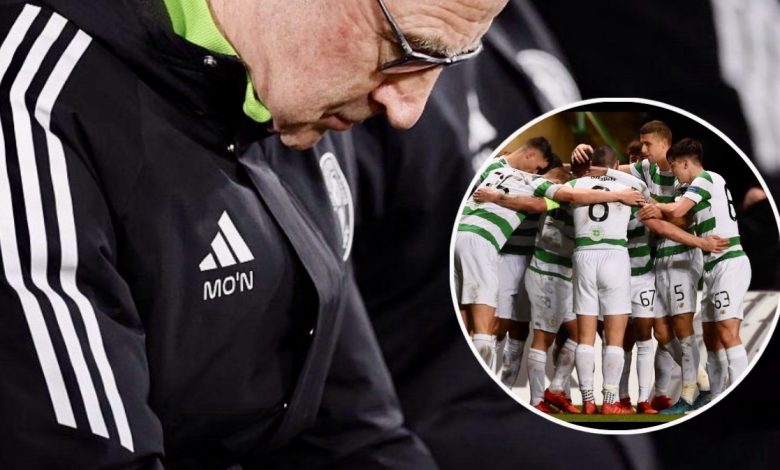

The feeling around Celtic Park on Thursday night was supposed to be one of renewal. After the disappointment of recent European setbacks and the painful 3–0 defeat to Rangers, Martin O’Neill’s side had been given the perfect opportunity to change the mood.
Instead, the Europa League opener against Ferencváros produced another painful night.
Celtic were beaten 3–1 at home, leaving supporters frustrated and questioning how the same problems could keep appearing on nights when the margin for error is so small. The defeat also came with a particularly uncomfortable sense of déjà vu, with some supporters and pundits pointing toward past European disappointments and the repeated pattern of Celtic conceding at crucial moments.
And now, attention has turned toward two players.
The headline number tells only part of the story. Celtic had 63 per cent possession and registered 16 shots, compared with 14 from Ferencváros, but the visitors were more clinical and finished with six shots on target to Celtic’s four.
That is what made the defeat so frustrating.
Celtic were not simply overwhelmed from the first minute. There were periods when O’Neill’s team had control of the ball and looked capable of recovering from a difficult start. But whenever Ferencváros found an opening, Celtic struggled to respond defensively.
The first warning arrived in the 20th minute.
Bamidele Yusuf moved into a dangerous position and his effort took a deflection off Liam Scales before ending up in the net. It was officially an own goal against Scales, and while the deflection made the finish difficult to judge, it immediately placed Celtic under pressure.
Celtic did respond.
Mika Baur restored parity in the 44th minute after Kieran Tierney drove into the box and cut the ball back. For a moment, it looked as though the home side had rescued themselves before half-time.
But that optimism lasted only briefly.
Ferencváros regained the lead before the interval when Kristoffer Zachariassen finished after Yusuf created the opening. Celtic had managed to get themselves level, only to undo that work almost immediately.
That moment became one of the biggest talking points of the night.
Supporters were left wondering why Celtic had allowed the visitors to move through the penalty area so easily at such a critical stage of the match. It was exactly the type of moment that can decide European games.
Then came the third goal.
Barely two minutes into the second half, Daniel Arzani punished another Celtic mistake. According to match reports, a Scales error helped Yusuf send Arzani through, and the former Celtic player cut inside before firing a superb effort into the top corner.
At 3–1, the night had changed completely.
And that is where the criticism became more focused.
Scales was inevitably one of the names mentioned because he was directly involved in the opening goal and was also involved in the sequence that led to Arzani’s strike. It is important, however, to separate individual criticism from the wider team performance: Celtic’s defensive problems were not created by one player alone.
The second player facing criticism from sections of the support was Haissem Hassan.
Hassan started the match but was replaced by Benjamin Nygren after 57 minutes as O’Neill searched for a way back into the game. Reports and supporter reaction highlighted frustration with his contribution, while his substitution became another indication that the manager felt changes were necessary.
That does not mean the entire defeat can fairly be placed on those two players.
Far from it.
Celtic’s problems were collective. The midfield struggled to impose itself when the game became chaotic, the defence repeatedly found itself exposed, and the attack could not turn possession into enough clear opportunities.
Former Celtic manager Neil Lennon made that point after the game, arguing that the responsibility should be placed on the players rather than automatically on O’Neill. He specifically questioned Celtic’s game management and decision-making in difficult moments.
That criticism fits the pattern Celtic supporters have witnessed repeatedly.
A team can dominate possession and still lose control of a European match. A team can equalise and still concede before half-time. A team can start the second half with everything to play for and concede again almost immediately.
Those small periods are often where European matches are decided.
O’Neill himself described the defeat as a “European lesson”, acknowledging that his side had not dealt with the game well enough.
The manager had already made changes before kick-off, bringing in Viljami Sinisalo, Oliver Sørensen, James Forrest and Hassan as he attempted to freshen the side following the Rangers defeat. But the overall response was still not enough.
Now the pressure moves to the players as much as the manager.
Celtic cannot change Thursday night’s result. They cannot remove the three goals from the scoreboard, and they cannot undo the individual mistakes that contributed to them.
What they can do is decide whether this becomes another European night remembered only for what went wrong, or the moment that forces the team to confront its weaknesses.
For the supporters, the most uncomfortable part is not simply losing 3–1.
It is how familiar the story feels.
Celtic have repeatedly found themselves punished in Europe for defensive mistakes, poor game management and lapses at crucial moments. Thursday night offered another example, with Ferencváros taking advantage whenever Celtic gave them an opportunity.
And with another huge fixture against Rangers approaching, O’Neill now has very little time to find answers.
The focus will inevitably remain on the two players attracting the loudest criticism, particularly Scales after his involvement in two major moments.
But if Celtic are serious about changing the story, the solution cannot simply be finding two players to blame.
The entire team has to improve.
Because the biggest concern for Celtic supporters is not that one European night went wrong.
It is that the same type of European nightmare appears to be returning again — and this time, there is no room for another repeat.