“HOW COULD THE REFEREE CONTINUE THE GAME AFTER WHAT HAPPENED?!” — SERGEJ JAKIROVIĆ STUNS FANS AFTER HULL CITY’S DRAMATIC DRAW WITH EVERTON

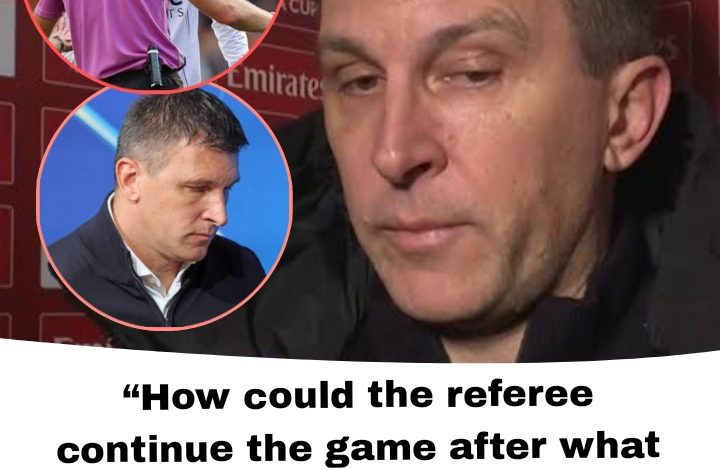
Hull City and Everton produced a dramatic afternoon of football as both sides shared four goals in an entertaining 2–2 draw, but the result has left plenty of questions for supporters to debate.
What looked like a promising opportunity for Everton to secure all three points turned into another frustrating away-day experience after Hull fought back to claim a share of the spoils.
The match had everything supporters expect from a competitive Premier League encounter: goals, defensive mistakes, momentum swings and a late fight for control.
However, the biggest talking point surrounding the result has been the reaction to the match and questions about the officiating.
Hull manager Sergej Jakirović has been linked to a sensational reaction in which he allegedly questioned how the referee could allow the game to continue after a disputed incident. However, the precise quotation circulating in the headline has not been independently verified, and there is no confirmed basis to claim that Jakirović threatened to abandon the Premier League.
Nevertheless, the match itself provided enough drama to leave both teams reflecting on what might have been.
Everton had opportunities to take control, while Hull demonstrated the determination needed to recover after falling behind. Neither side could find the decisive goal, leaving the contest level at full-time.
HULL STRIKE FIRST AFTER THE BREAK
The first half ended without a goal, despite Everton enjoying more possession and attempting to dictate the tempo.
The visitors looked capable of creating problems, but Hull remained organised enough to prevent them from turning their territorial advantage into a decisive lead.
The match changed shortly after the restart.
Joe Gelhardt gave Hull the advantage in the 48th minute, capitalising on a defensive mistake to put the home side ahead.
It was an important moment for Hull, who suddenly had the opportunity to put pressure on Everton and force the visitors to respond.
For Everton, conceding so soon after half-time was a frustrating setback. The visitors had entered the second period hoping to turn their possession into goals, only to find themselves chasing the game.
Hull, meanwhile, had reason to believe they could secure a major result.
But Everton were not prepared to allow the hosts to enjoy their advantage for long.
DEWSBURY-HALL BRINGS EVERTON BACK
Kiernan Dewsbury-Hall equalised for Everton in the 55th minute, restoring parity and changing the momentum of the contest.
The midfielder’s goal provided the response Everton desperately needed after Gelhardt’s opener.
It also demonstrated how quickly the balance of a football match can change. Hull had worked hard to establish their advantage, but Everton’s response meant the home side had to start again.
With the score level, both teams had opportunities to build towards a winning position.
Everton continued looking for openings, while Hull attempted to prevent the visitors from taking complete control.
The equaliser was particularly important because it stopped Hull from settling into a comfortable defensive rhythm.
Instead, the contest became increasingly open, with both sides aware that another goal could determine the outcome.
For Everton supporters, Dewsbury-Hall’s contribution offered hope that their team could leave Hull with all three points.
That hope would become even stronger 13 minutes later.
THIERNO BARRY PUTS EVERTON AHEAD
Everton completed their comeback in the 68th minute when Thierno Barry found the net to make it 2–1.
The goal put the visitors in front and appeared to place them in a strong position to secure victory.
After falling behind, Everton had responded with two goals of their own, demonstrating their ability to recover from a difficult situation.
Barry’s finish was another significant moment in a match that had become increasingly difficult to predict.
For Hull, the challenge was now clear: find another response before Everton could close the game out.
The home side had already shown that they could punish mistakes, but they needed to produce another attacking moment if they wanted to avoid defeat.
Everton, meanwhile, needed to protect their advantage.
The visitors had done the difficult work of turning a losing position into a winning one. Their priority should have been to remain disciplined, avoid unnecessary errors and manage the closing stages effectively.
However, Hull were not finished.
BELLOUMI DENIES EVERTON ALL THREE POINTS
Hull’s persistence paid off in the 74th minute when Mohamed Belloumi scored the equaliser.
The goal restored parity at 2–2 and ensured that Everton’s comeback would not result in victory.
Belloumi’s finish was a significant moment for Hull, who had refused to give up after seeing their early second-half advantage disappear.
Within 26 minutes of the restart, the match had gone from goalless to a four-goal contest.
Gelhardt had given Hull the lead, Dewsbury-Hall had equalised, Barry had put Everton ahead, and Belloumi had brought the home side back once again.
It was an entertaining sequence of events, but the defensive mistakes on both sides meant neither team could establish lasting control.
For Hull, the equaliser represented a reward for their determination.
For Everton, it was a painful setback after the visitors had worked hard to turn the match around.
The score remained 2–2, with neither side managing to find another breakthrough.
WHY THE REFEREEING DEBATE MATTERS
Whenever a football match produces controversy, supporters naturally want answers.
Decisions made by referees can influence the rhythm of a contest, affect players’ emotions and determine whether a team feels it has received fair treatment.
However, criticism of officiating needs to be based on the specific incident involved.
In Hull’s draw with Everton, the headline alleging that Jakirović questioned the referee’s decision to continue the match has not been verified by the sources available for this report.
It would therefore be misleading to present the quotation as an established statement from the Hull manager.
What is confirmed is that the match was fiercely contested and that both sides had to deal with difficult moments as the momentum shifted.
Everton also had a goal ruled out for offside following a VAR review during the contest, adding another notable officiating moment to the afternoon.
That decision formed part of the match’s wider drama, although it does not, by itself, establish that Jakirović made the alleged comments.
The distinction matters because there is a difference between reporting a confirmed managerial outburst and using a sensational quotation to describe a match that generated frustration.
If further evidence establishes that Jakirović publicly criticised a specific decision, the precise incident and his actual words would be essential to understanding his reaction.
Until then, supporters should treat the alleged statement with caution.
EVERTON LEFT TO REFLECT ON MISSED OPPORTUNITY
From Everton’s perspective, the draw will feel like an opportunity missed.
The visitors had enough possession to influence the game and, after falling behind, showed impressive character by scoring twice to take the lead.
Yet they could not protect that advantage.
Conceding the equaliser just six minutes after Barry’s goal meant Everton had little time to settle into a more controlled approach.
The result leaves questions about their ability to manage matches when they move into winning positions.
Scoring twice away from home should ordinarily provide a strong foundation for victory, but defensive mistakes can quickly undermine attacking progress.
Everton will need to examine how Hull were able to recover after the visitors had taken control.
For Hull, the outcome offers encouragement because the team showed resilience in a match that could easily have slipped away from them.
Their ability to respond twice after setbacks will be an important positive to take from the performance.
A DRAW THAT LEAVES QUESTIONS BEHIND
The 2–2 result was ultimately a reflection of a contest in which neither side managed to maintain control for long enough to secure victory.
Hull struck first after half-time, Everton responded with two goals, and Belloumi’s equaliser ensured the points were shared.
Both managers will have tactical and defensive issues to assess, while supporters will continue discussing the key moments that shaped the outcome.
The alleged reaction from Jakirović has added another layer of intrigue to the story, but the quotation must be treated as unverified unless reliable evidence confirms he made those comments.
What cannot be disputed is that Hull refused to surrender, Everton failed to protect their lead, and the four-goal contest delivered a dramatic finish.
For Everton, the challenge now is to turn promising performances into victories. For Hull, the priority will be building on their resilience while addressing the defensive issues exposed during the match.
And for supporters, one question remains: could Everton have done more to close the game out after taking the lead, or did Hull deserve their point for refusing to give up?
The final score was Hull City 2–2 Everton, with Joe Gelhardt and Mohamed Belloumi scoring for Hull, while Kiernan Dewsbury-Hall and Thierno Barry found the net for Everton.
The controversy surrounding the referee may continue to attract attention, but the facts of the match provide plenty for both clubs to analyse before their next fixtures.