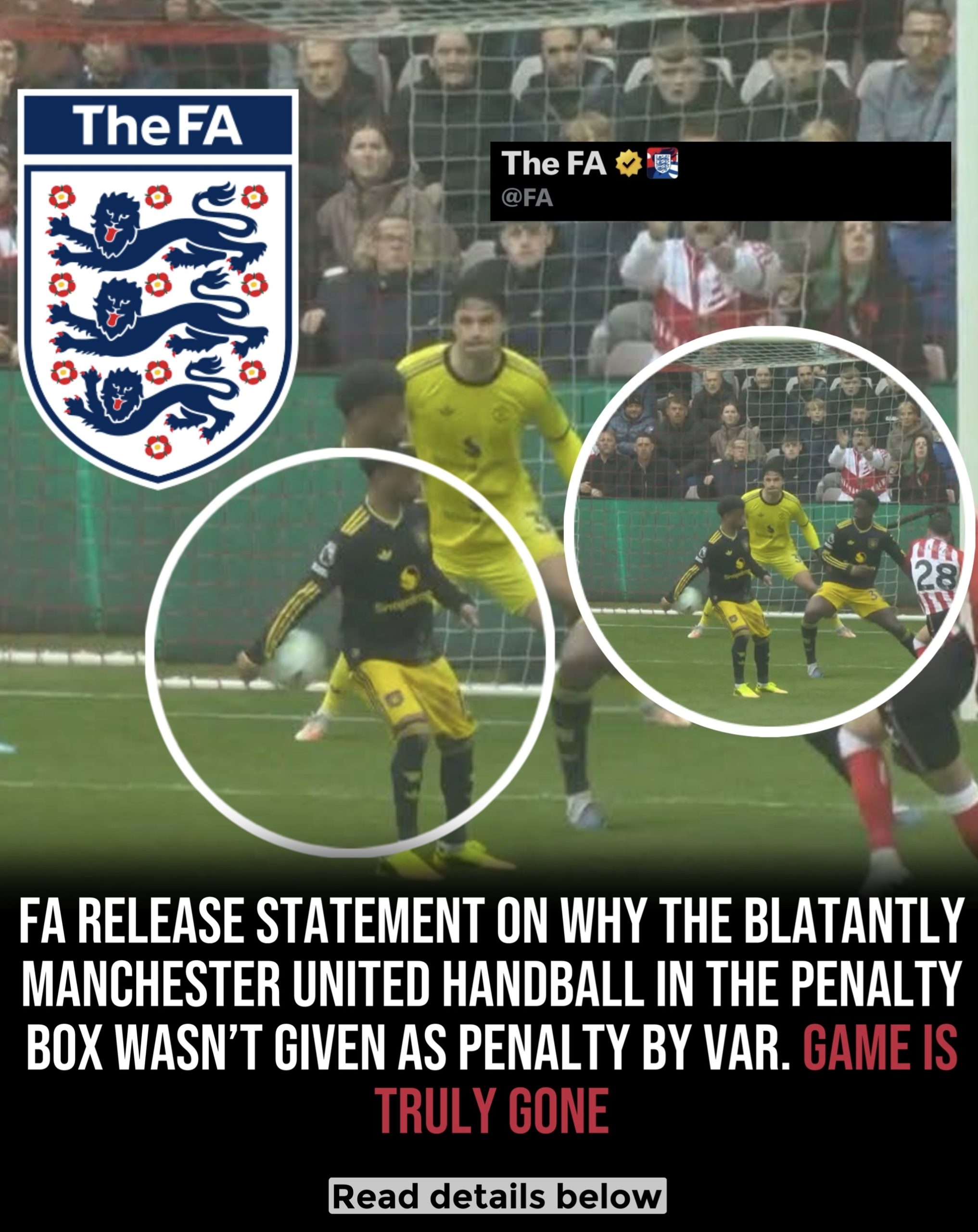
The controversy surrounding Manchester United’s 0-0 draw against Sunderland has completely dominated football discussion after the FA released an official explanation for why a dramatic handball incident involving Amad Diallo inside the penalty area was not awarded following a VAR review.
Sunderland supporters were left furious during the second half after appeals for a penalty were waved away despite television replays appearing to show the Manchester United winger clearly handling the ball while defending inside the box.
The incident came during one of Sunderland’s strongest attacking spells of the game at the Stadium of Light. A dangerous cross into the area caused panic among United defenders before the ball appeared to strike Amad’s arm at close range as Sunderland players desperately appealed for a spot kick.
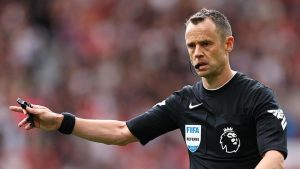
Referee Stuart Attwell immediately signaled for play to continue, but tensions inside the stadium exploded as players surrounded him demanding a VAR intervention.
For several moments the game paused while video officials checked the incident from multiple angles. Sunderland fans believed the delay meant the referee would surely be sent to the monitor for a second look.
Instead, VAR confirmed the on-field decision — no penalty.
The decision instantly triggered outrage both inside the ground and across social media, where fans from multiple clubs questioned how the incident failed to meet the threshold for a handball offence.
Many supporters described it as “one of the clearest penalties of the season,” while others accused officials of once again protecting bigger clubs in crucial moments.
Hours after the match, the FA and Premier League Match Centre released a statement explaining why the decision stood.

According to the statement, officials judged Amad’s arm position to be “natural relative to his movement” and determined there was not enough evidence to classify the incident as a deliberate handball offence.
The official statement read:
“VAR checked the possible handball involving the Manchester United player and confirmed the referee’s original decision of no penalty. The player’s arm position was deemed natural at close proximity and no clear and obvious error was identified.”
The explanation did little to calm furious Sunderland supporters.
Fans immediately flooded social media with screenshots and slowed-down footage of the incident, insisting the contact clearly prevented the ball from continuing into a dangerous area.
One fan posted:
“That gets given against every other club in the league.”
Another wrote:
“Stuart Attwell and VAR have bottled it completely.”
A third supporter commented:
“The handball rule changes every single week. Nobody understands it anymore.”
The controversy overshadowed what was otherwise an impressive performance from Sunderland, who created the better opportunities throughout the match and pushed Manchester United deep into their own half for long periods.
United goalkeeper Senne Lammens was arguably the visitors’ best player after producing several key saves to preserve the draw, while Ruben Amorim’s side struggled badly in attack and failed to impose themselves offensively.
Amad, meanwhile, found himself trending online after the final whistle, with debate surrounding the handball incident becoming the major talking point of the match.
Pundits after the game were split over the decision itself. Some argued the officials correctly interpreted the current handball law regarding proximity and reaction time, while others admitted they were shocked Stuart Attwell was not advised to review the incident on the pitchside monitor.
Former referees discussing the moment during post-match coverage suggested that modern interpretations of the handball law remain too subjective, leading to widespread confusion among fans, players, and managers alike.
One analyst stated:
“The problem isn’t just this decision — it’s consistency. Fans see similar incidents given as penalties every week.”
Despite the uproar, Sunderland manager Régis Le Bris reportedly avoided heavily criticizing the officials publicly, though frustration within the club was said to be significant following the match.
For Sunderland supporters, however, the feeling after the final whistle was clear.
They believe their side were denied a huge opportunity to claim all three points — and the FA’s explanation has only added even more fuel to the controversy.