PGMOL UNDER PRESSURE AFTER LEEDS VS TOTTENHAM AS TWO CONTROVERSIAL REFEREEING DECISIONS SPARK HUGE DEBATE — REPLAY CALLS EMERGE!

The Premier League clash between Leeds United and Tottenham Hotspur has sparked a major refereeing debate after two controversial decisions involving VAR became the biggest talking points of the afternoon. What should have been remembered as an important victory for Leeds has instead attracted enormous attention, with supporters questioning the consistency of officiating and demanding further explanations over two incidents that could have changed the direction of the contest.
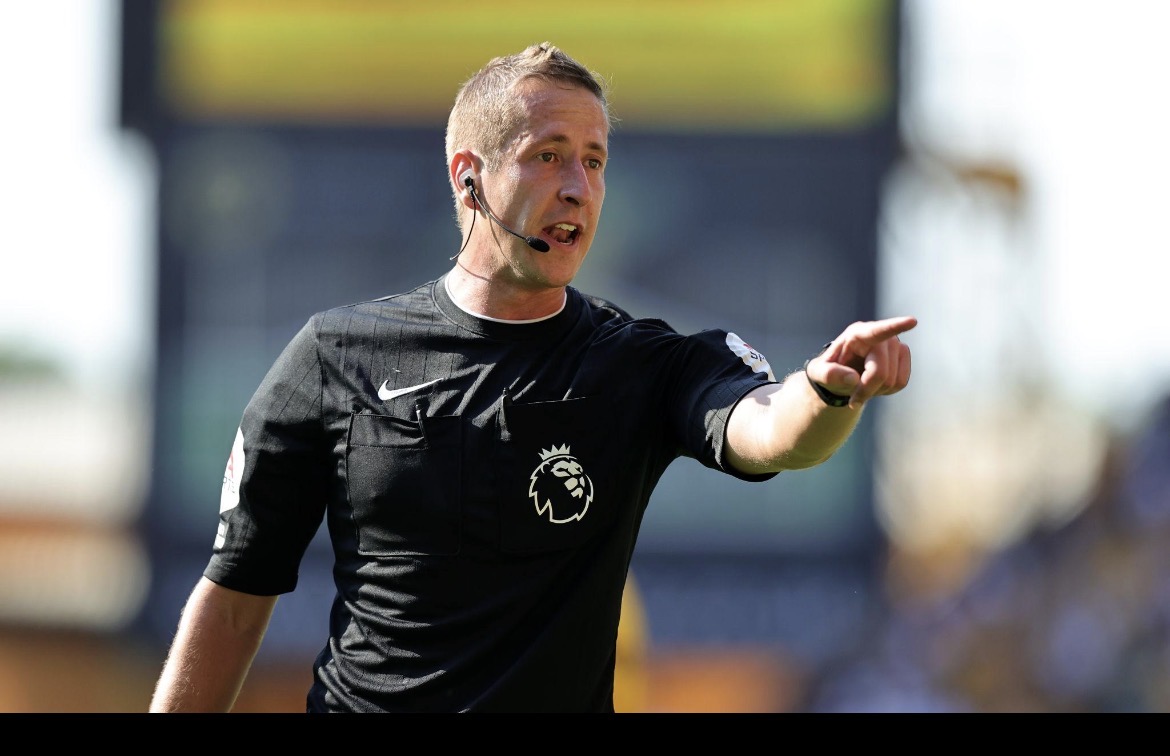
Leeds secured a valuable 1-0 victory at Elland Road thanks to Noah Okafor’s late winner, but the result was overshadowed by a series of contentious moments that left supporters on both sides frustrated. Referee John Brooks and the VAR team, led by Tony Harrington, found themselves under scrutiny following decisions involving a potential red card for Jayden Bogle and an early handball appeal against Tottenham midfielder Mateus Fernandes.
The two incidents have generated considerable discussion, particularly because supporters believe the available replay footage deserves closer examination.
THE JAYDEN BOGLE INCIDENT THAT CHANGED THE MOOD OF THE GAME
One of the biggest talking points came in the first half when Leeds defender Jayden Bogle challenged Tottenham attacker Mathys Tel.
The incident happened around the 34th minute when Bogle caught Tel on the back of his ankle, with the contact appearing particularly dangerous when viewed through the available replay angles.
The referee immediately awarded a free kick, but no yellow or red card was shown.
That was when the controversy intensified.
VAR officials spent approximately four minutes reviewing the incident, examining the nature of the challenge and the contact made with Tel’s Achilles area.
Tottenham supporters were expecting the referee to be invited to the pitchside monitor, believing the incident deserved more than the original free-kick decision.
However, that recommendation never came.
After the lengthy review, the original decision stood, meaning Bogle escaped without further punishment.
The decision immediately became a major talking point because Tel was unable to continue and was substituted in the 43rd minute.
For Tottenham supporters, the concern was not simply about the challenge itself but also about the apparent difference between what they believed the replay showed and the punishment eventually given.
Former Premier League referee Mike Dean was among those who questioned the decision, describing the challenge as worthy of a red card.
Steven Gerrard also expressed concerns, suggesting that an on-field review could have made a significant difference.
His argument was that the referee might have reached a different conclusion after watching the incident again on the monitor.
That has intensified the debate about whether VAR should have recommended an on-field review.
THE SECOND CONTROVERSIAL DECISION INVOLVING LEEDS
Interestingly, the controversy was not limited to Tottenham supporters.
Leeds also had an early penalty appeal rejected after a cross from Gabriel Gudmundsson appeared to make contact with the arm area of Tottenham midfielder Mateus Fernandes.
Leeds players immediately appealed, believing the incident should have resulted in a penalty.
However, referee John Brooks allowed play to continue.
VAR subsequently checked the incident and supported the original decision.
The explanation provided by the Premier League Match Centre was that the ball struck the very top of Fernandes’ arm, described as being within the permitted area near the shoulder.
According to the explanation, no handball offence had occurred.
Nevertheless, the replay footage generated considerable discussion among supporters, with some arguing that the position of Fernandes’ arm deserved closer attention.
Others accepted the explanation, insisting that not every contact between the ball and an arm should automatically result in a penalty.
This is precisely why the two incidents have attracted so much attention.
One involved a possible red card for a dangerous challenge, while the other concerned a possible penalty for handball.
Although the decisions went against different teams, both have raised questions about how supporters interpret VAR decisions and how clearly those decisions are communicated.
WHY PGMOL IS NOW FACING QUESTIONS
The Professional Game Match Officials Limited (PGMOL) is responsible for overseeing refereeing standards in English professional football.
Whenever controversial decisions dominate a Premier League fixture, attention naturally turns towards the officials and the processes used to reach those conclusions.
The Leeds versus Tottenham encounter has once again highlighted the importance of consistency.
Supporters want to understand why certain incidents result in serious disciplinary action while others do not, particularly when replay footage appears to show significant contact.
The Bogle challenge is especially interesting because of the injury suffered by Tel.
However, an important distinction must be made: the seriousness of an injury does not automatically determine whether a challenge deserves a red card. Referees must consider the nature of the tackle, its force, the point of contact and whether it meets the threshold for serious foul play.
That is why the decision remains open to debate.
There is also the question of whether the VAR intervention process worked as effectively as it should have.
VAR is intended to correct clear and obvious errors involving specific match-changing incidents. It is not designed to reopen every decision simply because supporters disagree with the referee.
Nevertheless, when a challenge attracts a lengthy review and the player involved subsequently leaves the pitch injured, supporters naturally expect a convincing explanation.
THE REPLAY FOOTAGE HAS ADDED ANOTHER DIMENSION
Another reason the controversy has continued is the availability of different replay angles.
Football supporters frequently watch incidents several times after matches, examining the point of contact, the movement of the players and the decisions made by the officials.
In this particular game, the Bogle challenge has attracted significant attention because the contact appeared dangerous and Tel was unable to continue.
The handball appeal has also generated different interpretations, especially because the position of Fernandes’ arm became a major talking point.
However, replay footage does not automatically mean that a Premier League match can be replayed.
There is currently no confirmed decision to replay Leeds United against Tottenham, and disagreement with a refereeing decision does not ordinarily provide grounds for ordering a match to be played again.
The debate concerns whether the officials reached the correct decisions, not whether the result should automatically be overturned.
That distinction is important as discussions continue.
WHAT DID THE MANAGERS MAKE OF THE CONTROVERSY?
Leeds manager Daniel Farke expressed confidence in the officials when discussing the Bogle incident.
He indicated that he trusted the referee and the VAR process, while also defending his player against suggestions of deliberate wrongdoing.
Farke described Bogle as a gentle character and expressed sympathy for Tel following the injury.
Tottenham manager Roberto De Zerbi also addressed the controversy after the defeat.
Interestingly, he declined to blame VAR entirely for his team’s performance, although the incident involving Tel was an obvious source of frustration.
De Zerbi acknowledged that Tottenham needed to improve in several areas, particularly their second-half performance.
That admission adds another dimension to the discussion because Spurs cannot attribute the entire defeat to one refereeing decision.
Leeds were the better side after the break, and Okafor’s 79th-minute strike ultimately separated the teams.
Nevertheless, Tottenham supporters will understandably continue questioning the decision that allowed Bogle to remain on the pitch.
A DEBATE THAT IS UNLIKELY TO DISAPPEAR QUICKLY
Perhaps the most interesting aspect of this entire situation is that both sets of supporters have reasons to feel frustrated.
Leeds supporters believe their early penalty appeal should have received greater consideration, while Tottenham fans remain convinced that Bogle should have been sent off.
The officials have therefore found themselves at the centre of a discussion involving two incidents with completely different implications.
For PGMOL, the bigger issue is the continuing demand for consistency, transparency and clear explanations whenever controversial decisions occur.
Supporters do not expect referees to get every decision right. However, they do expect the technology introduced to improve decision-making to provide greater confidence in the final outcome.
The four-minute review of Bogle’s challenge, followed by the decision not to recommend an on-field review, is likely to remain one of the most discussed moments from this fixture.
Meanwhile, the explanation surrounding Fernandes’ possible handball will continue to divide opinion among supporters who interpret the replay footage differently.
Leeds will celebrate three important points, while Tottenham must focus on recovering from a disappointing defeat.
But the refereeing conversation is far from over.
THE BIG QUESTION NOW
With two controversial decisions attracting attention, supporters are asking whether the officials interpreted both incidents correctly.
Should Jayden Bogle have received a red card for his challenge on Mathys Tel?
And should Leeds have been awarded an early penalty for the Fernandes handball appeal?
Those are the two questions that have turned an ordinary Premier League result into a major talking point.
For now, there is no confirmed announcement of a match replay or any decision to overturn the result. However, the discussions surrounding the two incidents demonstrate just how quickly refereeing decisions can become bigger talking points than the football itself.
One thing is certain: Leeds got the three points, Tottenham left Elland Road disappointed, and the debate surrounding the officials is unlikely to disappear anytime soon.