“PGMOL UNDER PRESSURE!” – Manchester United’s Controversial Penalty Against Aston Villa Sparks Fresh Refereeing Storm!

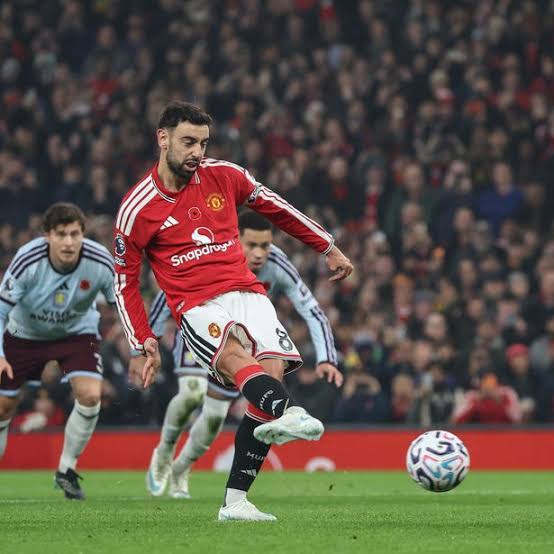
Manchester United’s dramatic 4-4 draw against Aston Villa has produced another major Premier League talking point, with the controversial penalty awarded to the home side in the 13th minute attracting considerable attention.
In a match filled with goals, defensive mistakes, dramatic comebacks and late controversy, one refereeing decision has become a subject of intense discussion.
Aston Villa arrived at Old Trafford hoping to secure an important result, but despite twice establishing a two-goal advantage, Unai Emery’s men eventually left Manchester with only one point.
However, the biggest talking point for some supporters was not the remarkable late comeback.
It was the penalty that gave Manchester United an opportunity to return to the contest when they were trailing 2-0.
The decision has divided opinion, raised questions about the consistency of Premier League officiating and reignited the familiar debate about whether VAR is actually making football’s most important decisions clearer.
And with Manchester United benefiting from the decision, Aston Villa supporters have every reason to examine the incident closely.
THE INCIDENT THAT CHANGED THE DIRECTION OF THE MATCH
Aston Villa could hardly have imagined a better opening at Old Trafford.
The visitors scored twice inside the opening four minutes, with Alysson and Nicolas Jackson taking advantage of Manchester United’s defensive problems to establish a commanding early advantage.
United were struggling, Villa were enjoying themselves, and the home supporters had every reason to fear another disappointing afternoon.
Then came the 13th-minute incident.
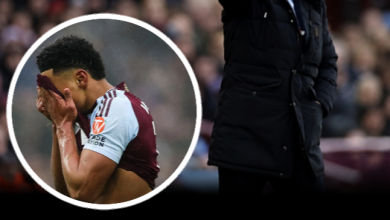
Matheus Cunha entered the penalty area, where Boubacar Kamara challenged him during an attempt to stop the Manchester United forward.
Referee Chris Kavanagh immediately pointed to the penalty spot.
Villa players were unhappy with the decision, while Kamara maintained that he had reached the ball first.
VAR subsequently reviewed the incident and allowed the original decision to stand.
Bruno Fernandes stepped forward and converted the penalty, reducing the deficit to 2-1.
The goal changed the atmosphere inside Old Trafford and gave Manchester United renewed confidence.
It was an important moment because, rather than allowing Villa to continue enjoying their two-goal advantage, United suddenly had a route back into the contest.
Youri Tielemans eventually made it 2-2 before the interval.
WAS IT REALLY A PENALTY?
This is where the controversy becomes particularly interesting.
There are two competing interpretations of the incident.
Some observers questioned whether Cunha made the most of the contact, while others argued that Kamara’s challenge was sufficient for the referee to award a penalty.
Replays discussed after the match suggested that Kamara made contact with Cunha’s foot before getting to the ball.
That detail is important because winning or attempting to win the ball does not automatically make every challenge legal.
The question is whether the defender’s action constituted a foul under the Laws of the Game.
Former PGMOL chief and FIFA referee Keith Hackett offered a particularly strong defence of Kavanagh’s decision.
Speaking to Aston Villa News, Hackett said:
“That is a nailed on penalty kick awarded by referee Chris Kavanagh who was in a great position to judge.”
He added that the decision did not require a VAR check because he believed the referee had got it right.
That assessment directly challenges the suggestion that Manchester United were unfairly awarded the penalty.
However, the disagreement surrounding the incident demonstrates why refereeing decisions continue to generate such passionate reactions.
One replay can produce different interpretations, particularly when supporters of the two clubs are examining the same moment from completely different perspectives.
WHY THE VAR REVIEW HAS BECOME PART OF THE DEBATE
The purpose of VAR is to correct clear and obvious errors and help referees reach accurate decisions in important situations.
But its involvement in controversial incidents often creates another layer of discussion.
In this case, VAR reviewed Kavanagh’s decision and did not recommend an overturn.
That means the penalty remained in place, and Fernandes was allowed to take the kick.
For Villa supporters, the frustration may be understandable, especially considering how dramatically the decision changed the momentum of the first half.
However, disagreement with a decision does not automatically establish that the officials made an error.
There is also an important distinction between an independent referee’s opinion and an official admission by the Premier League’s refereeing body.
At the time of writing, there is no verified public statement confirming that PGMOL has admitted the 13th-minute penalty was wrongly awarded or that it intends to send an apology letter to Aston Villa.
Consequently, claims of an official apology should not be presented as established fact.
ASTON VILLA HAD OTHER REASONS TO FEEL FRUSTRATED
Interestingly, the penalty was not the only incident that generated controversy during this extraordinary encounter.
Manchester United eventually rescued a point through Patrick Dorgu’s late equaliser, but Aston Villa also questioned the circumstances surrounding the goal.
United goalkeeper Senne Lammens had moved into the opposition penalty area for the corner and made contact with Villa goalkeeper Zion Suzuki.
Villa’s director of football operations, Damian Vidagany, publicly questioned whether Lammens had unfairly impeded Suzuki.
VAR reviewed the incident and allowed the goal to stand.
Vidagany subsequently criticised the decision, arguing that the goalkeeper had been deliberately obstructed.
Sky Sports reported the club official’s objections and the debate surrounding the application of the rules.
This means Villa had two major refereeing talking points to discuss after the match, although they involved separate incidents and should not be confused.
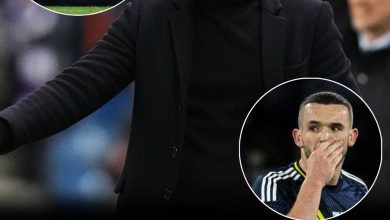
Unai Emery, meanwhile, was particularly frustrated that his team surrendered two separate two-goal advantages.
He explained that his anger was directed at the situation rather than his players.
The manager also clarified why he had briefly walked towards the tunnel after United’s late equaliser.
THE BIGGER QUESTION: CAN PREMIER LEAGUE OFFICIATING REGAIN EVERYONE’S CONFIDENCE?
Football supporters do not expect referees to be perfect.
Mistakes are part of the game, and even the most experienced officials can make difficult decisions under enormous pressure.
However, supporters expect consistency, transparency and a clear explanation when controversial decisions become the centre of attention.
That is why incidents involving VAR attract so much attention.
When a penalty is awarded, supporters want to understand why the referee considered the challenge a foul.
When VAR intervenes, they want to understand what evidence justified the intervention or why the original decision was allowed to stand.
The Premier League must continue working towards making those explanations clearer.
The controversy surrounding Manchester United and Aston Villa is another reminder that football’s officiating debate is far from over.
FINAL VERDICT: VILLA’S FRUSTRATION IS UNDERSTANDABLE, BUT HAS PGMOL ACTUALLY MADE A MISTAKE?
The 13th-minute penalty was undoubtedly a significant moment in the match.
It gave Manchester United a way back into the contest, changed the atmosphere at Old Trafford and contributed to an extraordinary first-half comeback.
Aston Villa supporters are entitled to question the decision.
Manchester United supporters, equally, will point to the referee’s position, the VAR review and Hackett’s defence of the award.
But there is one thing that must remain clear: no verified PGMOL admission or apology letter has been established.
Until an official statement confirms otherwise, the controversy should be discussed as a disputed refereeing decision rather than an admitted officiating mistake.
And perhaps that is the most important question emerging from this match:
If two sets of supporters can watch the same incident and reach completely different conclusions, how much more must football’s authorities do to restore confidence in refereeing decisions?