CELTIC SUFFERED THE WORST POSSIBLE START IN THE PREMIER SPORTS CUP FINAL AGAINST ST MIRREN

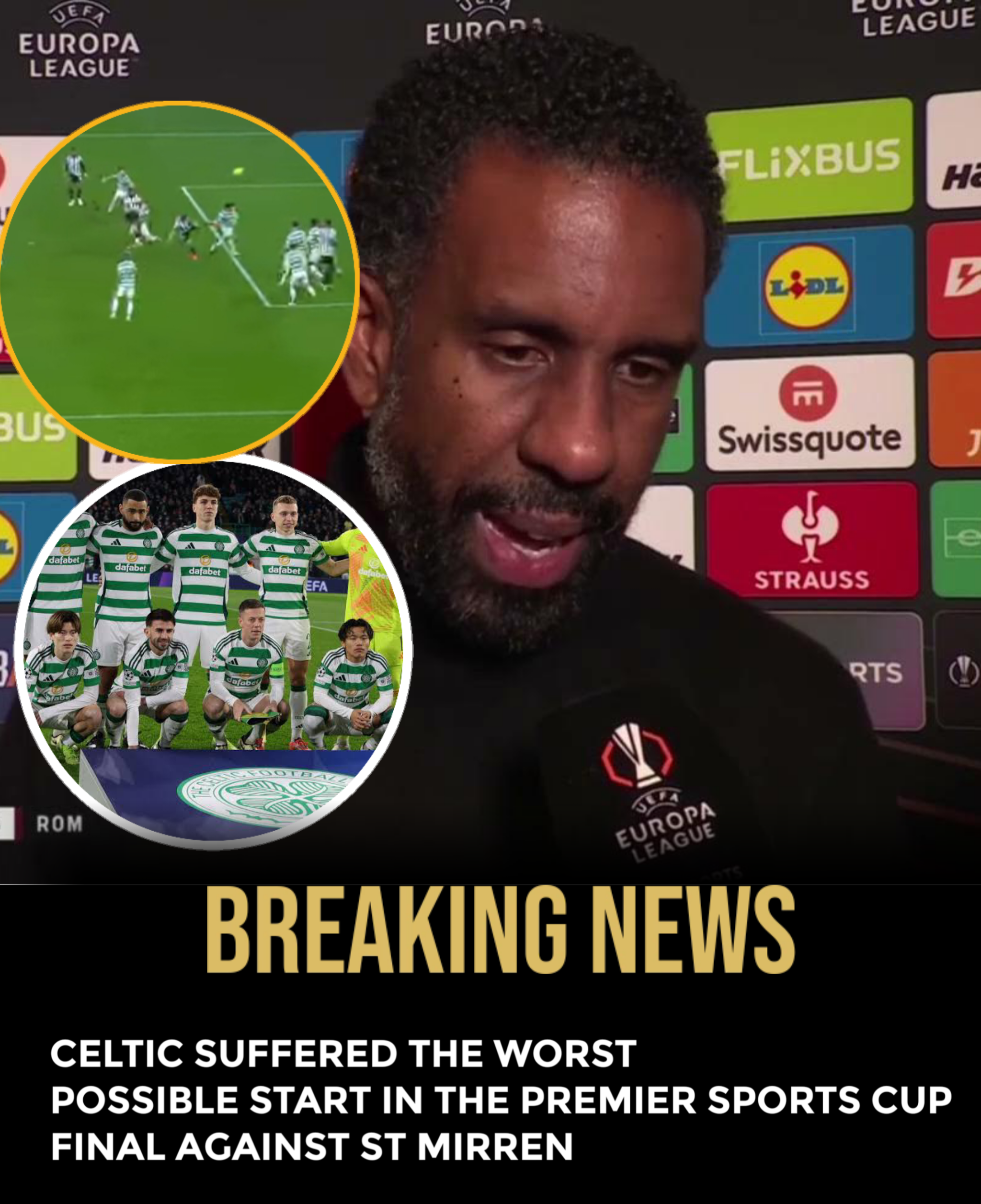
Celtic supporters arrived at the Premier Sports Cup final against St Mirren with a renewed sense of optimism, convinced they were about to see a tactical shift that many had been calling for. Early signs appeared to suggest that head coach Wilfried Nancy had abandoned his preferred back three and reverted to a more traditional back four, a move that immediately lifted the mood among the Hoops faithful. For a fanbase that has grown increasingly vocal about defensive structure and balance, the prospect of a familiar four-man defence was warmly welcomed.
From the stands and across social media, there was visible excitement as the defensive line seemed to take shape. Kieran Tierney, Liam Scales, Auston Trusty and Anthony Ralston appeared, at first glance, to be lining up across the back in a flat four. It was a configuration that made sense to many supporters. Tierney’s pedigree and natural instincts as a left-back are well established, Ralston has often been dependable on the right, while Scales and Trusty offered physicality and aerial presence in central defence. On paper, it looked like a return to a system that Celtic fans recognised and trusted.
Given recent debates around Nancy’s tactical approach, it was hardly surprising that supporters were quick to embrace what they believed was a change of direction. Since taking charge, Nancy has largely stuck with a 3-4-3 formation, a system that prioritises fluid movement, positional rotation and aggressive wing-back play. While it has delivered positive moments, it has also divided opinion. Some fans have questioned whether it leaves Celtic exposed defensively, particularly against opponents willing to sit deep and exploit space on the counter attack.
The apparent switch to a back four against St Mirren therefore felt significant. It suggested, at least initially, that Nancy may have been responding to supporter concerns or adapting his approach for a high-stakes cup final. As the teams prepared for kick-off, there was a sense that Celtic were about to take a more pragmatic route, focusing on defensive solidity while still trusting their attacking quality to make the difference.
However, that early optimism did not last long. As the match unfolded, it became clear that the initial assumptions were wide of the mark. Rather than abandoning his favoured system, Nancy had once again opted for his 3-4-3 setup, albeit with subtle variations that caused the early confusion. What looked like a back four in static moments quickly transformed once Celtic moved into their attacking and defensive phases.
Tierney, rather than operating as a conventional full-back, was positioned on the left side of a back three, a role he has been asked to perform since returning to the club. Ralston, meanwhile, was pushed higher up the pitch as a wing-back, providing width and energy on the right. On the opposite flank, the structure mirrored this approach, with Celtic seeking to stretch St Mirren and dominate possession through numbers in midfield and wide areas.
For many supporters, the realisation was met with frustration rather than anger. The sense of excitement that had greeted the perceived back four slowly gave way to resignation. Fans who had been buzzing at the thought of a more orthodox defensive line were left feeling that they had been misled, even if unintentionally. It was not that the players themselves were the issue, but rather the system in which they were being asked to operate.
After the match, Nancy was asked directly about his tactical setup and whether he had considered moving away from the 3-4-3 formation. Speaking to BBC Radio Scotland, the Celtic head coach was clear in his response. He confirmed that the system itself had not changed, even if its appearance suggested otherwise at certain points in the game.
“Yes, but this is only the system,” Nancy explained. “After that, the animation will be different.”
It was a typically philosophical answer that reflected Nancy’s broader approach to football. For him, formations are merely starting points, frameworks designed to allow players freedom to express themselves within defined principles. The “animation” he referred to was the movement, rotation and positional interchange that occurs once the game is in motion. In his view, focusing too heavily on whether a team is playing a back three or a back four misses the bigger picture.

Nancy’s comments underlined his belief that modern football is less about rigid structures and more about adaptability. He has consistently emphasised the importance of players understanding multiple roles and being comfortable in different areas of the pitch. While that philosophy has earned praise in some quarters, it has also tested the patience of supporters who crave clarity and consistency, particularly in big matches.
The reaction from Celtic fans in the aftermath was mixed. Some accepted Nancy’s explanation and appreciated the nuances of his tactical thinking, acknowledging that formations can shift seamlessly during a game. Others remained unconvinced, arguing that the lack of a clear and stable defensive setup continues to create uncertainty, both for the players and the supporters.
As Celtic reflect on the cup final and look ahead to the rest of the season, the debate around Nancy’s system is unlikely to disappear. The desire among fans to see a back four, especially with personnel that appear well suited to it, remains strong. At the same time, Nancy shows no sign of abandoning his principles, insisting that success lies not in the numbers on a team sheet but in how those numbers c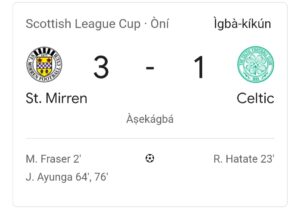 ome to life on the pitch
