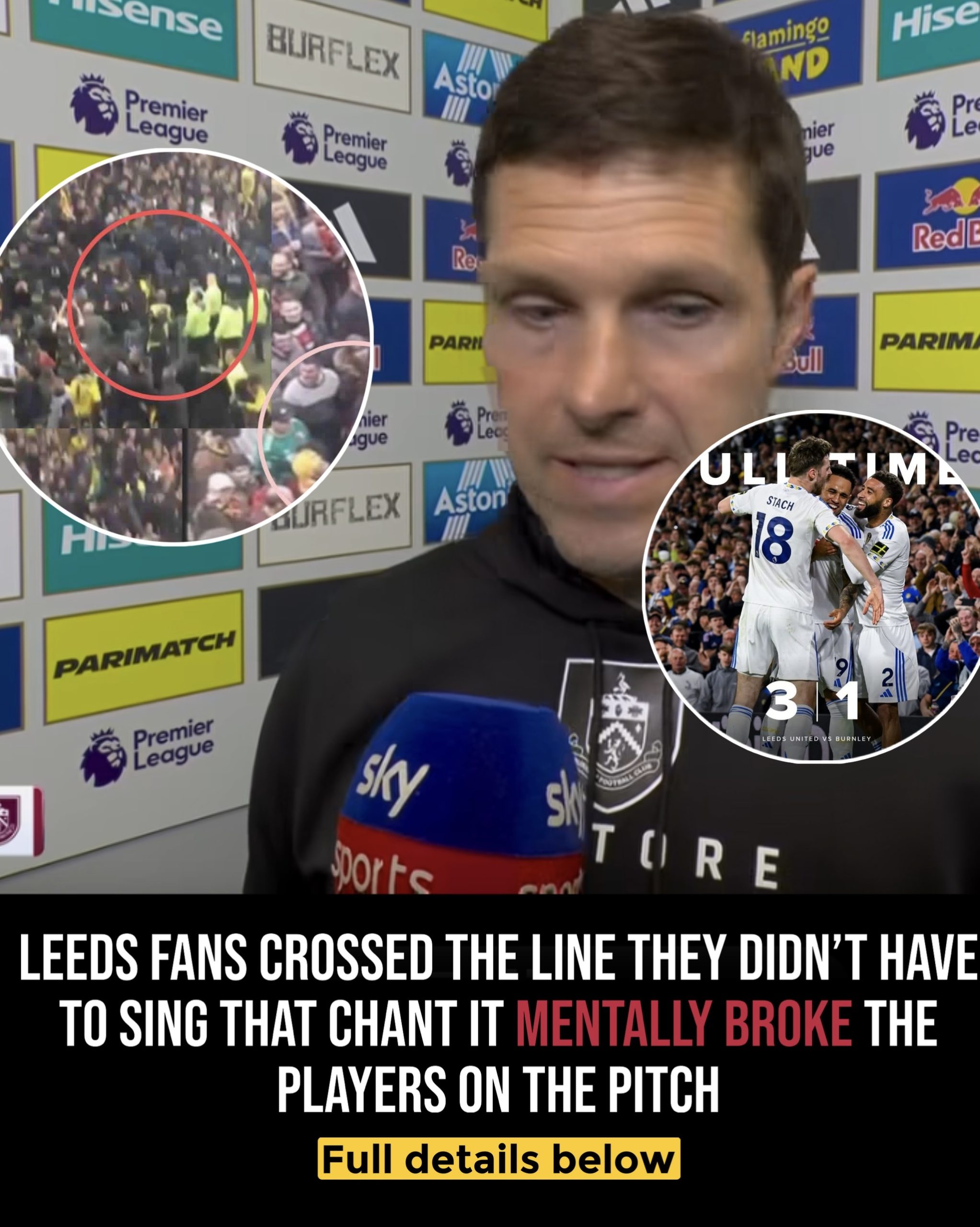

The aftermath of Leeds United’s 3–1 victory over Burnley has taken a dramatic turn, with Burnley boss Mike Jackson delivering a powerful and controversial assessment of the atmosphere at Elland Road. While the result itself was significant in Leeds’ fight for Premier League survival, it was Jackson’s explosive post-match comments that have dominated headlines.
Speaking shortly after the final whistle, Jackson expressed deep frustration not just with his team’s performance, but with what he described as unacceptable behavior from sections of the home support. His words were blunt and emotionally charged: “Leeds fans crossed the line. They didn’t have to sing that chant—it mentally broke the players on the pitch.”
The statement has since ignited widespread debate across the football world, raising questions about fan conduct, player welfare, and the fine line between passionate support and harmful intimidation.
From the opening moments of the match, Leeds looked energized, pressing high and feeding off the electric atmosphere inside Elland Road. The home fans, fully aware of the importance of the fixture, created a hostile environment that seemed to unsettle Burnley early on. As Leeds took the lead and tightened their grip on the game, the volume and intensity in the stands only increased.
However, according to Jackson, that intensity evolved into something more damaging as the match wore on. He suggested that certain chants directed at Burnley players went beyond competitive banter and became deeply personal, ultimately affecting his team’s mental state.
“They’re already in a difficult position,” Jackson said, referencing Burnley’s relegation struggles. “Confidence is fragile in moments like this. When the noise turns into something targeted and relentless, it can have a real psychological impact.”
On the pitch, Burnley’s performance appeared to reflect that fragility. After conceding multiple goals in quick succession early in the second half, their structure seemed to collapse. Players who had shown resilience earlier in the match began to lose focus, misplacing passes and struggling to maintain composure under pressure.
Despite managing a late consolation goal, Burnley never looked capable of mounting a serious comeback. For Jackson, the mental aspect of the game was just as important as the tactical one—and in his view, his players were overwhelmed not only by Leeds’ quality but by the atmosphere surrounding them.
The reaction from the Leeds side has been more restrained. While players and staff celebrated a crucial victory that brought them closer to safety, they largely avoided engaging directly with Jackson’s accusations. The focus remained on the three points and the collective effort required to secure them.
Many Leeds supporters have also defended their role, arguing that creating an intimidating environment is part of football culture, especially in high-stakes matches. Elland Road, long regarded as one of the most passionate stadiums in England, has built its reputation on precisely that kind of energy.
Yet, Jackson’s comments have reignited an ongoing conversation within the sport. Organizations like the Football Association have repeatedly emphasized the importance of maintaining respect in stadiums, cracking down on abusive or discriminatory behavior. The challenge, however, lies in distinguishing between passionate support and conduct that crosses into harmful territory.
For Burnley, the incident underscores the emotional toll of a difficult season. Relegation battles test not only a team’s tactical discipline but also its mental resilience, and Jackson’s remarks suggest that his players may have reached a breaking point in this particular match.
As discussions continue, the spotlight remains firmly on the role of fans in shaping the modern game. Football thrives on passion, noise, and intensity—but as this incident shows, those same elements can quickly become controversial when boundaries are perceived to have been crossed.
In the end, Leeds secured a vital win on the pitch. Off it, however, the debate sparked by Jackson’s comments may linger far longer than the result itself, forcing players, fans, and authorities alike to reflect on where the line should truly be drawn.