UEFA RELEASES STATEMENT ON REFEREE AFTER HE REFUSED TO GO TO THE SCREEN DESPITE VAR CALL OVER POSSIBLE RED CARD FOR FOUL ON NADERI

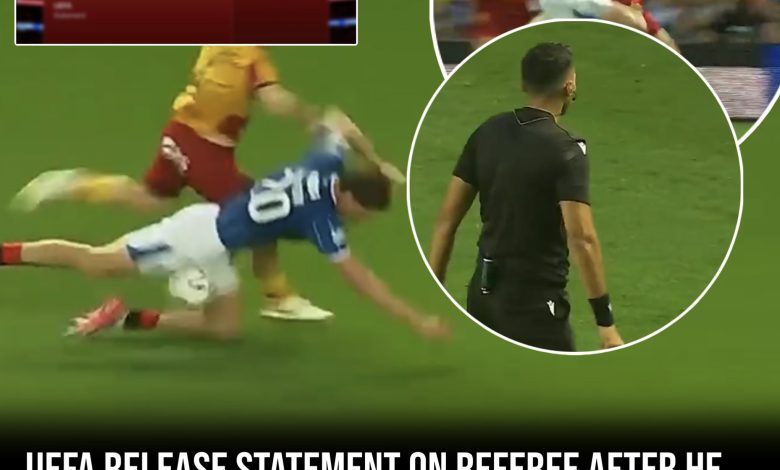
In a dramatic moment that has sparked heated debate across European football, UEFA has issued an official statement following a high-profile incident in which a referee declined to review the pitchside monitor despite a recommendation from the VAR team concerning a potential red-card challenge on Naderi.
The controversy erupted during a tense European fixture when Naderi was on the receiving end of a heavy challenge. The player went down in clear discomfort after what many observers described as a high, forceful tackle. The referee initially allowed play to continue before eventually producing a yellow card amid strong protests from the affected team. Moments later, the VAR official intervened, recommending an on-field review to assess whether the challenge constituted serious foul play that might warrant a straight red card.
What followed surprised many inside the stadium and watching at home. The referee listened to the advice but ultimately chose not to walk over to the monitor. He confirmed his original decision and ordered the game to restart. The refusal to conduct the on-field review immediately became the talking point of the match, with players, coaches and supporters expressing strong opinions on both sides of the argument.
In the hours after the final whistle, UEFA released a carefully worded statement that has helped calm some of the initial outrage. The governing body confirmed that the VAR team had correctly followed protocol by highlighting a possible red-card offence and recommending a review. However, UEFA also underlined that the final decision always rests with the on-field referee. The statement made clear that the official’s choice not to use the monitor in this instance fell within the framework of the existing regulations, and that UEFA supported the referee’s on-field judgment after reviewing the available evidence.
UEFA emphasised that while the technology is an important tool designed to assist officials with clear and obvious errors, it does not remove the referee’s authority or responsibility. The organisation noted that the referee had assessed the challenge in real time, considered the VAR recommendation, and remained confident in his original call. After examining the incident in full, UEFA stated that it saw no reason to overturn or criticise the decision that was ultimately applied on the pitch.
The measured tone of the statement has been welcomed by those who believe the referee acted within his rights. Some former officials and pundits have pointed out that referees are still expected to trust their own judgment, especially in situations that involve subjective interpretation of force, intent and the overall context of the challenge. Others continue to argue that once the VAR recommends a review for a potential red card, the screen should almost always be used in the interests of transparency and consistency.
Naderi’s condition remains a point of concern for his club, with medical staff continuing to monitor the player after the challenge. The club is understood to have sought clarification from UEFA regarding the process, but the governing body’s public position is that the referee’s final decision is supported.
The episode has once again highlighted the delicate balance between human judgment and technology in modern football. UEFA’s statement carefully acknowledges the VAR recommendation while firmly backing the man in the middle. In doing so, the organisation has sought to reinforce the principle that the referee remains the ultimate decision-maker, even when the headset suggests a different course of action.
As the debate continues among fans and commentators, one message from UEFA is clear: the on-field decision in this case stands, and the referee’s handling of the situation has been endorsed. Whether that settles the argument or merely fuels further discussion remains to be seen, but for now the official line from European football’s governing body is one of support for the judgment shown on the night.