“PATHETIC! WHEN IT FAVOURS THEM, IT’S A GREAT RULE!” — GABRIEL AGBOLAHAN LAUNCHES STUNNING ATTACK ON LEEDS UNITED AFTER BRIGHTON DRAW

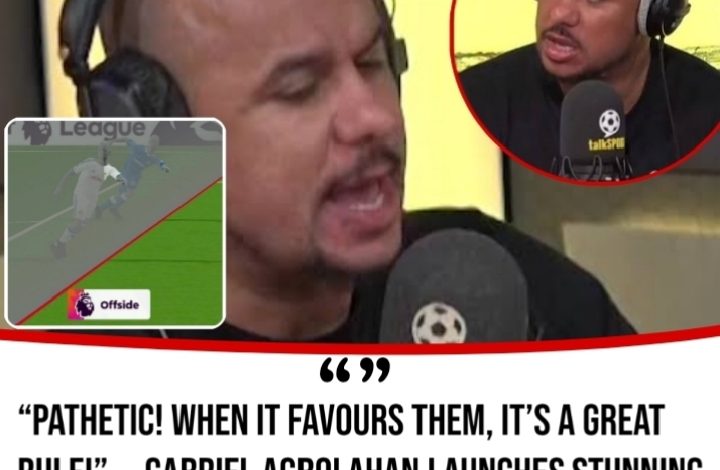
Leeds United may have walked away from the American Express Stadium with a point, but the 1-1 draw with Brighton & Hove Albion has left plenty of questions behind — particularly over a controversial offside decision that denied the Whites what could have been a crucial goal.
Popular pundit Gabriel Agbolahan has now entered the debate, launching a furious attack over the decision and questioning whether the reaction would have been the same if the situation had gone in Leeds’ favour.
The controversial moment has quickly become one of the biggest talking points from the match.
Leeds started brightly and took the lead through Jayden Bogle in the 15th minute, giving Daniel Farke’s side a perfect platform to claim another impressive Premier League result away from home.
But Brighton refused to disappear.
The hosts continued to push for an equaliser and eventually got their reward when Luka Vušković found the net in the 71st minute.
The final score finished 1-1, but the result could have looked very different had Leeds’ disallowed goal been allowed to stand.
THE OFFSIDE DECISION THAT CHANGED THE MOOD
The incident centred around an attacking move involving Leeds, with the assistant referee and officials deciding that the player involved was in an offside position.
The image from the incident has since circulated widely, showing the controversial offside line drawn across the pitch.
And that image has only intensified the debate.
For some supporters, the decision is straightforward.
If the attacking player is ahead of the second-last defender when the ball is played, the offside law applies.
For others, however, the positioning and the way the line was interpreted has raised questions about whether Leeds were genuinely gaining an unfair advantage.
That disagreement is exactly what has turned the incident into a major talking point.
And Agbolahan was clearly not impressed.
AGBOLAHAN QUESTIONS THE REACTION
The pundit’s reported criticism was particularly pointed.
“PATHETIC! WHEN IT FAVOURS THEM, IT’S A GREAT RULE!”
The comment was aimed at the wider reaction to the offside decision and the way supporters and football figures interpret controversial refereeing decisions depending on which team benefits.
Agbolahan’s argument is essentially that football fans can be remarkably selective.
When a decision benefits their own club, it can suddenly become a perfectly acceptable application of the laws.
But when exactly the same rule goes against them, the conversation changes completely.
That is what makes the offside debate so explosive.
Leeds supporters will understandably look at the incident from their own perspective.
They will argue that their team had already done enough to create the opportunity and that losing a potential goal to an extremely fine offside call is frustrating.
Brighton supporters, meanwhile, will point to the rules and argue that the officials simply did their job.
And somewhere between those two positions is the controversy that has dominated the conversation since the final whistle.
LEEDS HAD ALREADY DONE THE HARD WORK
The frustration will be even greater for Leeds because they had put themselves in an excellent position.
Bogle’s 15th-minute goal gave the visitors the lead and allowed Farke to set his team up to manage the match.
Leeds were not required to chase the game.
Instead, Brighton had to find a way through a Leeds side that had already demonstrated its ability to defend a lead.
For long periods, the Whites looked capable of leaving the south coast with all three points.
But Brighton kept pushing.
The home side eventually found the equaliser through Vušković in the 71st minute, bringing the match back to life.
Suddenly, Leeds were forced to defend their point rather than protect a victory.
That is why the disallowed goal has become so important in retrospect.
Had it counted, the complexion of the game could have been completely different.
WAS THE OFFSIDE CALL CORRECT?
This is where the argument becomes complicated.
The offside law is one of the most heavily scrutinised rules in football.
Supporters can spend minutes debating whether a player’s shoulder, knee, foot or another legal scoring part of the body was ahead of the relevant defender.
VAR has made these decisions even more visible.
Instead of simply accepting the assistant referee’s decision, supporters now see freeze-frames, lines and replays that can make extremely marginal decisions appear even more controversial.
The image from the Leeds incident has therefore become another piece of evidence for both sides of the argument.
One side will say the line proves the player was offside.
The other will ask whether such a tiny positional difference should determine whether a goal stands.
And that is where football’s eternal debate over technology begins.
FARKE’S SIDE LEFT FRUSTRATED
For Farke, the biggest disappointment will be that Leeds were unable to convert their overall performance into three points.
The Whites showed plenty of courage away from home and had periods where they looked like the stronger side.
But Brighton’s response proved that one goal was never going to be enough.
Once Vušković equalised, the pressure increased.
Leeds had to remain organised and avoid conceding a second.
They eventually achieved that objective, but the feeling that they could have won the match will remain.
A 1-1 draw away from home is not necessarily a bad result.
Brighton are an established Premier League side and the American Express Stadium is not an easy place to visit.
But when a team takes an early lead and has a potentially decisive goal ruled out, a point can feel like a missed opportunity.
A DEBATE THAT WILL NOT DISAPPEAR
Agbolahan’s comments have ensured that the offside incident will receive even more attention.
His criticism does not simply question one decision.
It challenges the mentality surrounding controversial refereeing decisions in football.
His suggestion is that supporters often celebrate a rule when it benefits their team and condemn that same rule when it works against them.
That is certainly a provocative argument.
And Leeds fans are unlikely to complain about the debate being reopened.
The Whites have already experienced plenty of scrutiny since returning to the Premier League, and every controversial decision involving the club is likely to attract significant attention.
LEEDS MUST MOVE ON
Ultimately, Leeds cannot change the decision.
The goal was ruled out.
Brighton equalised.
And the final whistle confirmed a 1-1 draw.
Farke’s players must now focus on the next challenge rather than allowing frustration over one decision to affect their season.
There are positives to take.
Leeds remain competitive.
They showed that they can cause problems for an established Premier League opponent away from home.
And they demonstrated enough quality to suggest that they will not simply be satisfied with surviving in the division.
But the offside controversy has added another layer to the result.
For Brighton, it is a point gained.
For Leeds, it feels like two points lost.
And for Agbolahan, it is another example of how football’s rules can suddenly become the centre of attention when a crucial goal is involved.
His “when it favours them, it’s a great rule” comment is guaranteed to divide supporters.
Some will agree completely.
Others will accuse him of simply taking Leeds’ side.
But one thing is certain: the offside decision has given this 1-1 draw a controversy that will continue long after the players have left the American Express Stadium.
The score says 1-1.
The debate says something very different.