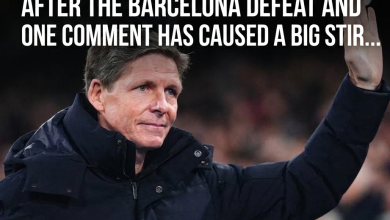
NOTTINGHAM FOREST CONFIRM THE DEPARTURE OF A STAFF MEMBER AFTER FALLING OUT WITH EVANGELOS MARINAKIS ON TEAM MANAGEMENT AND DEVELOPMENT

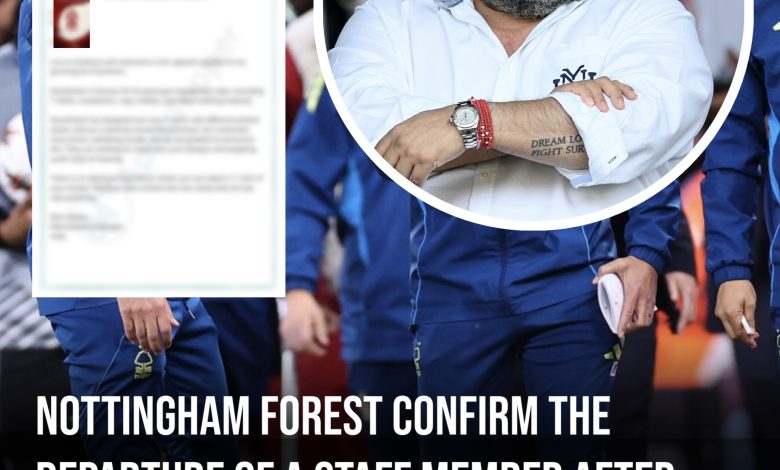
A quiet but seismic shift has taken place behind the scenes at the City Ground, and the full scale of its impact is only now beginning to sink in across the Premier League.
Nottingham Forest have confirmed the departure of a senior staff member whose influence once stretched far beyond the banks of the River Trent. The exit follows a prolonged and increasingly bitter falling out with owner Evangelos Marinakis over the direction of team management, recruitment strategy and long-term player development. What began as an ambitious vision for a multi-club football empire has ended in silence, distance and an abrupt contractual termination that the club has chosen not to trumpet from the rooftops.
For months the individual in question had become a ghost around the training ground and stadium. Matchdays passed without his presence in the directors’ box. Training sessions continued without his input. Transfer discussions moved forward without his fingerprints. By the time the summer window closed and a new head coach began shaping the squad in his own image, the writing was already on the wall in bold red letters. Sources close to the hierarchy now confirm the contract was formally terminated last week, bringing a definitive end to a turbulent chapter that many inside the club had privately wished would conclude sooner.
The role itself had been created with considerable fanfare. It carried the grand title of Global Head of Football and was designed to sit above the traditional sporting director structure. Responsibilities included oversight of recruitment, performance analysis, squad planning and player development not only at Nottingham Forest but across the wider portfolio of clubs controlled by Marinakis. The appointment was presented as a statement of intent, a signal that Forest were no longer content to operate as a mid-table Premier League side but intended to build a coherent, data-driven, globally connected football model. Supporters were told this was the future. Stability, innovation and long-term thinking were the buzzwords of the day.
Reality proved far messier.
Within weeks of the appointment, tensions surfaced with the then head coach. A fundamental disagreement over transfer targets and the balance of power between the dugout and the boardroom created a fracture that never properly healed. The coach was gone before the season had properly begun. What followed was a carousel of permanent appointments that left the squad disoriented and the fanbase exhausted. Four different men occupied the hot seat in a single campaign as Forest lurched through a relegation battle that threatened to undo years of progress. Throughout it all, questions about the effectiveness of the global structure grew louder. Signings arrived with mixed results. Relationships between key figures deteriorated. Communication between the owner and the senior football executive became strained to the point of breakdown.
By early spring the individual had been instructed to stay away from the training ground and the stadium. The last competitive match he attended was a home defeat in February. After that, silence. No official explanation was offered at the time. Club statements continued to insist everything was functioning normally even as the absence became impossible to ignore. Those close to the situation described a working relationship with Marinakis that had simply stopped working. Differences over the pace of development, the style of recruitment and the level of autonomy granted to the technical staff proved irreconcilable.
The club’s decision not to issue a formal statement announcing the termination has only added to the intrigue. There has been no glowing tribute, no carefully worded appreciation of past contributions, no public expression of thanks. Instead the name has simply disappeared from the official website’s list of key personnel. In the unforgiving world of elite football, that absence speaks louder than any press release. Chief Football Officer George Syrianos has already absorbed additional responsibilities, and there are no plans to recreate the global role in its previous form. The message from the top is clear: the experiment is over.
Supporters have reacted with a mixture of relief, frustration and dark humour. Many felt the appointment had disrupted a relatively settled environment that had previously delivered European football and genuine upward momentum. Others argued that the ambition was correct but the execution and interpersonal dynamics were fatally flawed. Online forums and phone-in shows have been filled with the same recurring questions. How much damage was done to the dressing-room culture? How many transfer opportunities were missed or mishandled? And most pressingly, can the current regime under Oliver Glasner finally deliver the stability that has been so elusive?
The wider context cannot be ignored. Nottingham Forest under Marinakis have become synonymous with rapid change. Managers, executives and sporting directors have come and gone with dizzying frequency. Each new appointment has been accompanied by bold promises of a new era. Each departure has been followed by the same cycle of introspection and fresh starts. This latest exit fits the pattern perfectly. It removes a high-profile figure whose presence had become a lightning rod for criticism, yet it also underlines how difficult it has been to establish lasting continuity in key decision-making roles.
There is a certain irony in the timing. The club has just appointed a new chief executive with extensive experience across European football governance. The head coach is beginning to imprint his own methods on the squad. Significant investment has been made in the playing staff. On paper the ingredients for progress exist. Whether the removal of this particular executive finally clears the path for coherent long-term planning remains to be seen. What is beyond dispute is that the falling out with Marinakis over fundamental questions of team management and development has closed one door permanently.
For now the City Ground moves forward without the man once tasked with shaping its footballing future across three countries. The contract is terminated. The role has been quietly dismantled. And the silence from the club only amplifies the sense that this was a relationship that could no longer be repaired. In the unforgiving landscape of modern football ownership, even the most ambitious projects can end not with a bang but with a deleted webpage and a contract that no longer exists.
Nottingham Forest will hope this marks the end of the turbulence. History suggests the next chapter is already being written.