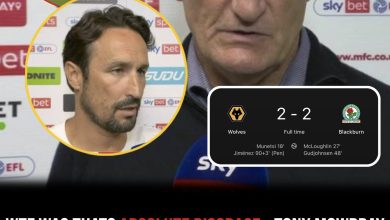
“TWO WOLVES STARS, ONE BRUTAL VERDICT!” — DON GOODMAN’S HYPOTHETICAL 2/10 RATINGS EXPOSE THREE MAJOR CONCERNS AND SPARK DEBATE OVER WOLVES’ PREMIER LEAGUE AMBITIONS!

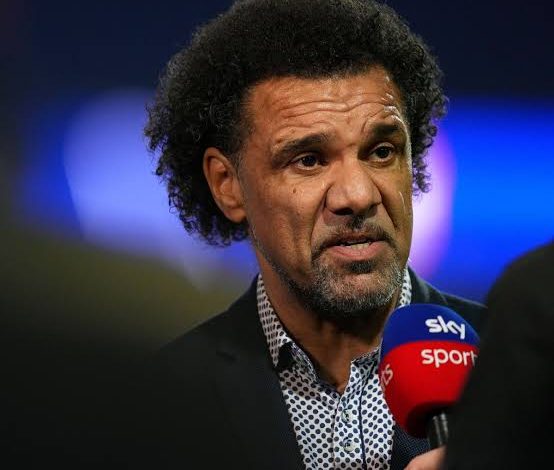
Wolves supporters know that football is not always about the final score. Sometimes, the most worrying part of a performance is what happens between the important moments: the misplaced passes, the poor decisions, the defensive hesitation, and the mistakes that opponents can punish.
That is why a hypothetical assessment of two Wolves players has raised an uncomfortable question for supporters: are there deeper problems that need to be addressed before they become even more costly?
Imagine Sky Sports pundit Don Goodman examining two disappointing individual performances and handing both players a hypothetical rating of just 2/10. It would be an extremely harsh assessment, but it would also open the door to a wider debate about standards, consistency, and what Wolves need from their senior players.
To be clear, these are illustrative ratings for discussion, not actual scores awarded by Goodman. The point is to consider the kinds of concerns that can emerge when individual performances fall below expectations.
And there are three areas that would deserve particular attention.
THE FIRST CONCERN: CARELESS PASSING AND POOR DECISION-MAKING
The first issue is the ability to keep possession when the pressure increases.
At the highest level, a misplaced pass can change the direction of an entire match. A player might complete several simple passes, but one careless decision in a dangerous area can immediately put the team under pressure.
For Wolves, reliable distribution is especially important when the opposition presses aggressively. Players need to recognise when to move the ball quickly, when to retain possession, and when a safer option is the right choice.
The concern is not that every pass must be perfect. No footballer produces a flawless performance every week. Instead, the question is whether avoidable mistakes are becoming a pattern.
If a player repeatedly gives the ball away without pressure, ignores a teammate in a better position, or attempts a risky pass when the team needs control, supporters are entitled to ask questions.
The same applies to decision-making in the final third. Attacking players must know when to take on a defender, when to release the ball, and when to make a run that creates space for somebody else.
A hypothetical 2/10 rating would certainly be severe. However, it illustrates how quickly frustration can grow when a player’s decisions repeatedly work against the team’s overall plan.
THE SECOND CONCERN: DEFENSIVE RESPONSIBILITY
The second issue concerns what happens when Wolves lose possession.
Modern football demands that every player understands their defensive responsibilities. Attackers must help initiate the press, midfielders must close passing lanes, and defenders must remain organised when opponents attempt to exploit open spaces.
One player failing to track a runner can leave a teammate exposed. A midfielder arriving too late can allow an opponent to turn and attack the defence. A defender stepping forward at the wrong moment can create space behind the back line.
These individual moments may look small when viewed separately, but they can have a significant effect on a team’s performance.
Wolves need players who understand that defending is a collective responsibility. Even when an individual has an excellent attacking contribution, that cannot automatically excuse repeated lapses without the ball.
This is where the debate becomes interesting. Should supporters judge a player primarily on their technical ability, or should their overall contribution to the team carry greater weight?
There is no simple answer. Different positions demand different things, and a winger should not necessarily be judged by exactly the same standards as a centre-back.
Nevertheless, effort, concentration, positioning, and tactical discipline remain essential.
If two players were hypothetically given ratings as low as 2/10, their defensive contributions would naturally become part of the discussion. Wolves supporters would want to know whether the problems were individual mistakes, a tactical misunderstanding, or a combination of both.
THE THIRD CONCERN: WHAT DOES IT MEAN FOR WOLVES’ AMBITIONS?
The third issue is perhaps the most important because it goes beyond two individual players.
Wolves cannot afford to let temporary weaknesses become long-term habits. In a demanding league, consistency often separates teams that establish themselves from those that spend too much time worrying about results and their position in the table.
A team can survive an occasional poor performance. Every club experiences difficult afternoons, and even experienced players make mistakes.
The real test is how the team responds.
Do the players learn from their errors? Does the coaching staff adjust the tactical approach when something is not working? Do senior figures take responsibility? And are there enough reliable alternatives to encourage competition for places?
Those questions matter more than any single hypothetical rating.
It would be unfair to judge a player’s entire career on one difficult match. Equally, it would be a mistake to dismiss repeated problems simply because a player has previously performed well.
Wolves supporters want to see progress, commitment, and a clear direction. They want players who can handle pressure, make intelligent decisions, and perform consistently when the stakes are high.
If the same weaknesses continue to appear, the conversation will inevitably move beyond individual mistakes and towards the team’s overall preparation and tactical organisation.
That is why an imagined 2/10 assessment makes such a dramatic discussion point. It forces supporters to consider what acceptable standards should look like and whether every player is meeting them.
WOULD DON GOODMAN REALLY BE THAT HARSH?
That is the question at the centre of this debate.
Don Goodman is known to football audiences as a pundit who analyses performances and discusses the challenges facing teams across the English game. However, the ratings in this article are hypothetical, and there is no claim that he has actually given these two Wolves players 2/10 scores.
A rating is only one person’s interpretation of a performance. Another supporter might believe a player deserves a four or five, particularly if they contributed positively in other areas.
That disagreement is part of what makes football so engaging.
Some fans focus on mistakes. Others look at the player’s instructions, the quality of their teammates, and the tactical situation in which those errors occurred.
Before condemning either player, it is worth considering the bigger picture. Were they being asked to perform a role that did not suit their strengths? Were they left exposed by the team’s shape? Or were the problems largely down to their own decisions?
The answers would make a significant difference to any fair assessment.
WOLVES FANS HAVE A BIG QUESTION TO ANSWER
Ultimately, this debate is about more than two names or two numbers.
It is about the standards Wolves must maintain, the importance of accountability, and the response required when performances fall short of expectations.
A hypothetical 2/10 rating is deliberately provocative, but the underlying questions are serious: can Wolves eliminate avoidable mistakes, improve their defensive discipline, and find greater consistency across the team?
Supporters will have their own views, and not everyone will agree about which players deserve criticism.
So, Wolves fans, what do you think?
Are careless passing, defensive lapses, and poor decisions the biggest concerns, or is the real problem more tactical?
And if you had to assess two Wolves players after a disappointing performance, would you ever give either of them a 2/10?
Share your opinion in the comments. The debate is open.