UEFA UNDER PRESSURE AFTER CRYSTAL PALACE VS HOFFENHEIM AS TWO CONTROVERSIAL REFEREEING DECISIONS SPARK HUGE DEBATE

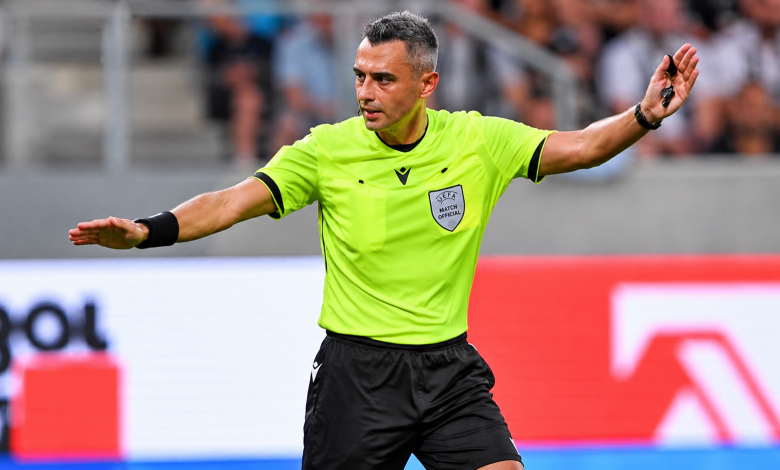
UEFA could find itself facing serious questions following Crystal Palace’s dramatic 1-1 Europa League draw against Hoffenheim, with referee Horațiu Feșnic at the centre of an explosive debate surrounding two major incidents that threatened to change the outcome of the encounter.
What should have been remembered as an important European night for both sides has instead become a talking point among football supporters, particularly those who believe the officiating was inconsistent during some of the most decisive moments of the match.
The encounter at Selhurst Park had everything. An early Hoffenheim goal, missed opportunities, a controversial dismissal, furious reactions from the home supporters and a dramatic stoppage-time equaliser.
However, the biggest talking points emerged from two incidents involving the referee, with supporters questioning whether the same disciplinary standards were applied to both teams.
And with Adam Wharton becoming the centre of attention following his dismissal, another incident involving a Hoffenheim player has attracted considerable scrutiny.
THE FIRST DECISION THAT LEFT CRYSTAL PALACE SUPPORTERS FURIOUS
Crystal Palace entered the encounter hoping to secure an important result in their Europa League campaign.
However, things did not go according to plan after Alexander Prass gave Hoffenheim the lead in the seventh minute.
The visitors took advantage of a defensive mistake to move ahead, putting immediate pressure on Pierre Sage’s team.
Palace attempted to respond, but Hoffenheim remained dangerous and created several opportunities to extend their advantage.
The atmosphere became increasingly tense as the match progressed, particularly when referee Horațiu Feșnic began making disciplinary decisions.
Adam Wharton was booked in the 58th minute after catching Wouter Burger on the ankle during a challenge.
Although the midfielder continued playing, he was clearly walking a disciplinary tightrope.
Things eventually became much worse for the Crystal Palace midfielder in the 77th minute.
During an aerial challenge involving Burger, Wharton led with his arm and caught his opponent.
Feșnic decided that the incident deserved another yellow card.
Having already been booked, Wharton was immediately sent off.
The decision left Palace with 10 men for the closing stages of the match and appeared to hand Hoffenheim a significant advantage.
However, not everyone agreed with the referee’s assessment.
Some supporters questioned whether the challenge genuinely deserved a second yellow card, particularly considering how important the decision was at that stage of the encounter.
The Guardian’s live coverage described the dismissal as harsh, adding another dimension to the growing debate.
THE SECOND INCIDENT THAT HAS CAUSED EVEN MORE QUESTIONS
While Wharton’s dismissal attracted immediate attention, another incident involving Hoffenheim forward Andrej Kramarić became an equally important talking point.
The Croatian forward had already received a yellow card earlier in the match.
During the second half, Kramarić appeared to deliberately use his arm to control the ball.
The incident did not result in another booking, allowing the Hoffenheim forward to remain on the pitch.
This was where the controversy intensified.
The Guardian’s live reporter suggested that Hoffenheim should probably also have been reduced to 10 men, arguing that Kramarić had deliberately used his arm despite already being booked.
For Palace supporters, the comparison was difficult to ignore.
Wharton had received a second yellow card and been dismissed, while Kramarić escaped a possible second booking for an incident that attracted considerable attention.
Naturally, questions began emerging about consistency.
Were both incidents assessed using the same disciplinary standards?
Should Kramarić have received another yellow card?
And was Feșnic too harsh in his decision to dismiss Wharton?
These are the questions that have continued to fuel the debate surrounding the match.
PALACE REFUSED TO GIVE UP DESPITE THE CONTROVERSY
Despite being reduced to 10 players, Crystal Palace refused to accept defeat.
Hoffenheim appeared to be heading towards an important away victory after taking the lead through Prass and maintaining their advantage for most of the encounter.
However, the closing stages produced a dramatic twist.
Palace continued pushing forward, determined to find an equaliser despite their numerical disadvantage.
Their persistence eventually paid off in the 90th minute of normal time.
Daichi Kamada found himself in the right position following a goalmouth scramble and managed to guide the ball beyond Oliver Baumann.
Selhurst Park erupted as the home supporters celebrated a dramatic equaliser.
The goal secured a 1-1 draw for Palace and prevented Hoffenheim from taking all three points.
For many supporters, however, the late equaliser did little to end the debate surrounding the referee’s decisions.
UEFA FACES QUESTIONS OVER THE OFFICIATING DEBATE
The attention has now shifted towards the wider discussion about refereeing consistency in European football.
Nevertheless, the two incidents have created an uncomfortable discussion for those examining the match.
The most significant issue is not simply whether Wharton’s dismissal was justified or whether Kramarić deserved another booking.
It is whether comparable disciplinary situations were treated consistently.
For Crystal Palace supporters, the unanswered questions are particularly frustrating because Wharton’s dismissal changed the tactical balance of the closing stages.
Hoffenheim suddenly had an extra player and looked capable of protecting their advantage.
Instead, Palace found a way back into the contest and rescued a valuable point.
The controversy is likely to remain a major talking point whenever supporters revisit the match.
And the official explanation and assessment of the incidents, doesn’t stop the debate surrounding Feșnic’s performance.